
Shopping Cart
What to Know Before Installing Underwater Dock Lights
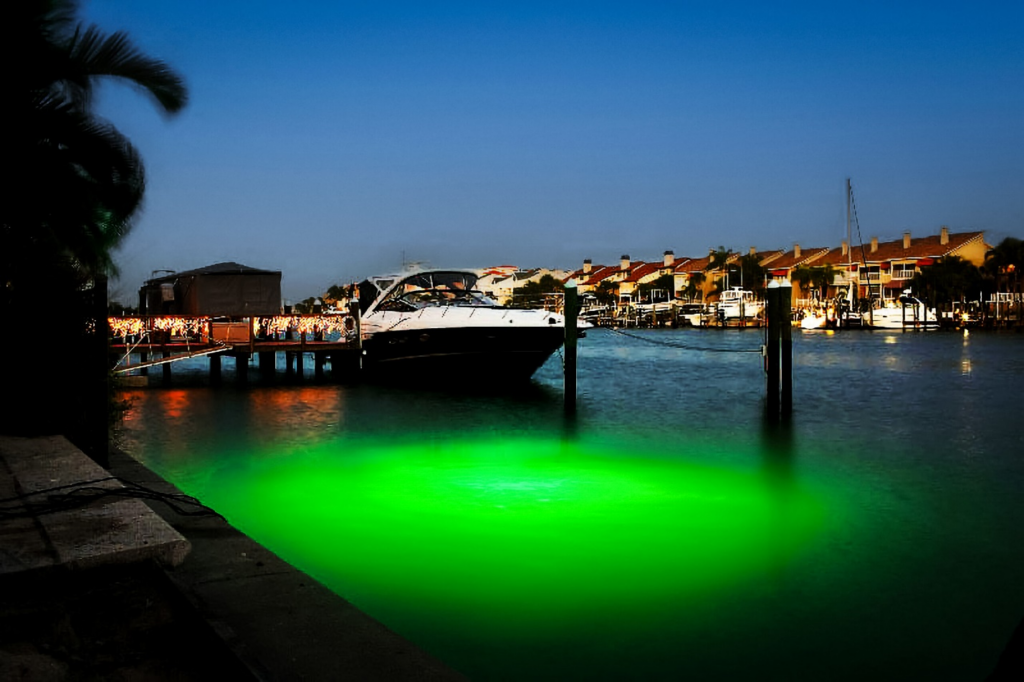
If you own a dock on an inlet waterway or along a lakefront, chances are you’ve noticed more property owners installing underwater dock lights. The reason is simple. When the sun goes down, lighting the water around your dock changes how the entire area looks and functions. It adds visibility, creates a clear focal point from shore, and draws fish activity closer to where you can actually see it.
One of the most popular choices today is underwater green lights. Green light is widely used in marine environments because it illuminates the water effectively while attracting fish and other aquatic life. For dock owners on inlet waterways especially, this combination of visibility and fish activity makes lighting both practical and enjoyable.
Still, if you’re considering underwater lighting for the first time, you probably have questions.
How bright are underwater dock lights, really? How much power do they use each month? How far does the light spread through the water? Are underwater LED lights complicated to install? Do underwater fish lights require ongoing maintenance?
These are smart questions. Adding marine underwater lights to your dock is an investment, and it’s important to understand what you’re installing before you drop anything into the water. Whether you’re interested in underwater fishing lights to attract more activity near your dock or simply want better nighttime visibility, knowing what to expect helps you make the right decision.
In this guide, we’ll walk through everything you should know before installing underwater dock lights. From how underwater green lights perform in inlet waterways and lakes, to power usage, coverage area, installation steps, and maintenance expectations, you’ll have a clear understanding of what’s involved before you get started.
Why Dock Owners Install Underwater Dock Lights
For many waterfront property owners, installing underwater dock lights starts as a simple idea. They want better visibility around their dock at night. They want to see what’s happening below the surface. They want a cleaner, clearer view of the water after dark. Over time, those practical reasons turn into one of the most noticeable upgrades they can make to their dock.
Whether installed along an inlet waterway or on a lakefront dock, marine underwater lights serve a clear purpose. They light up the water where it matters most, right around your structure.
Increased Visibility Around Your Dock
One of the biggest reasons dock owners choose underwater dock lights is improved visibility. With up to a 60-foot diameter of lighted water, the illuminated area extends well beyond the edges of the dock itself. That spread of light makes a visible difference from shore and from the water.
At night, a clearly lit dock area helps with general awareness. You can see movement in the water. You can better judge distance from your dock. If you’re approaching slowly by boat or simply spending time outside after sunset, that extra visibility brings clarity to the space.
Because underwater LED lights are designed to provide strong, consistent illumination beneath the surface, the result is a defined circle of visible water instead of scattered light. Dock owners often say that once installed, the lit area becomes a natural focal point of the property at night.
Attracting Fish and Aquatic Life
Another common reason people install underwater fish lights is to draw fish activity closer to their dock. Light in the water attracts smaller organisms, which in turn attract baitfish and larger fish. Over time, the illuminated area can become an active gathering spot.
This is especially effective in inlet waterways, where moving water supports steady marine activity. Many property owners who fish from their dock rely on underwater fishing lights to bring that activity within clear view. Instead of guessing where fish may be, you can actually see movement in the lighted area.
Lakefront docks can also benefit. While water conditions vary, properly placed marine underwater lights can still create a visible zone that encourages aquatic life to gather near the structure.
Enhancing the Experience of a Beach Front Property
Beyond visibility and fishing, underwater dock lights also change how a beach front property feels after dark. The illuminated water creates a defined visual point from shore. Instead of disappearing into darkness, the dock becomes a highlighted feature of the waterfront.
Because modern underwater LED lights operate using just 80 watts of power, this added presence doesn’t require excessive energy use. You get a wide, visible area of green light beneath the surface while maintaining efficient power consumption.
For many dock owners, that combination of function and atmosphere is exactly why underwater lighting becomes a long-term addition to their property.
Understanding How Underwater LED Lights Work

Before installing underwater dock lights, it helps to understand what makes underwater LED lights different from older lighting options. The performance of modern marine underwater lights comes down to the LED technology inside them. These systems are designed to deliver strong illumination, efficient energy use, and long operational life, all while remaining environmentally safe.
At the core of the system is patent-protected, advanced LED technology. Instead of relying on traditional bulbs, LEDs generate light more efficiently, which directly affects brightness, coverage area, and overall energy consumption.
Energy Efficiency
One of the most practical advantages of underwater LED lights is their low power draw. Each unit consumes just 80 watts of power. That’s a modest amount of electricity for lighting a wide section of water beneath your dock.
Because the system is designed for reduced energy consumption, dock owners can illuminate a large underwater area without excessive electrical use. For anyone planning to operate their lights regularly in the evenings, this efficiency matters. You get consistent performance while keeping power usage manageable.
For waterfront properties on inlet waterways or lakes, using 80 watts to light up a significant portion of the dock area makes underwater LED lights an economical long-term solution.
Light Output and Coverage
Energy efficiency would not mean much without strong light output. These underwater LED lights are engineered to produce ultra-bright illumination beneath the surface. The result is a clear, defined circle of light in the water.
Each light provides up to a 60-foot diameter of illuminated water. That level of coverage allows dock owners to see well beyond the immediate edge of their structure. Instead of a narrow beam, the light spreads outward in a wide, visible area.
For marine underwater lights installed along docks on inlet waterways, this coverage can make a noticeable difference in nighttime visibility and fish activity. On lakefront docks, it creates a clearly defined underwater focal point that remains visible from shore.
Greater Life Expectancy of LED Technology
Another key benefit of underwater LED lights is their longer life expectancy compared to conventional bulbs. LED technology is known for operating longer while consuming a fraction of the energy required by traditional lighting systems.
Because these lights use advanced, patent-protected LED components, they are built to provide extended operational life under normal use. That longer life expectancy means fewer bulb replacements and more consistent performance over time.
In addition, the LED technology used in these marine underwater lights is environmentally safe. Combined with reduced energy consumption, this makes underwater LED lights a responsible choice for dock owners who want effective underwater illumination while being mindful of energy use and environmental impact.
Where Underwater Dock Lights Work Best
When planning to install underwater dock lights, location matters. Not every body of water behaves the same way, and understanding where these lights perform best helps set the right expectations. Based on real-world use, underwater dock lights are most commonly and effectively installed on inlet waterways and lakefront docks.
Inlet Waterways
Inlet waterways are one of the most popular settings for underwater dock lights. These areas typically have moving water, regular tidal flow, and steady marine activity. That movement supports a healthy environment where fish and other aquatic life naturally circulate.
In this setting, underwater LED lights create a clearly visible illuminated area beneath the dock. The 60-foot diameter of lighted water becomes a defined gathering point, especially in the evening hours. Because water is constantly moving through inlet systems, the lighted area often remains active and dynamic.
Dock owners along inlet waterways frequently install underwater fish lights to make that activity visible from above. The green underwater glow provides both improved dock visibility and a reliable way to observe marine life after dark. For many waterfront properties, this environment delivers the most noticeable results.
Moving water also helps distribute smaller organisms that are drawn to light, which can increase activity within the illuminated area. That is one reason underwater fishing lights are especially popular in these settings. The combination of steady water movement and focused underwater lighting makes inlet docks a strong match for marine underwater lights.
Lakefront Docks
Underwater dock lights are also well suited for lakefront properties. While lakes do not have the same tidal movement as inlet waterways, they can still benefit from properly placed underwater LED lights.
On clear-water lakes, the 60-foot diameter of illumination creates a defined and highly visible underwater zone. From shore, the lighted area becomes a focal point of the dock. The green glow beneath the surface enhances nighttime visibility and makes it easier to see activity in the water.
For homeowners who fish from their dock, underwater fishing lights can help concentrate visible movement within a manageable area. Even without tidal flow, lakefront docks can experience consistent fish activity within the illuminated zone.
Whether installed on an inlet waterway or a lakefront dock, underwater dock lights perform best where they can create a clear, wide circle of light beneath a fixed dock structure. Choosing the right setting ensures the lighting system delivers both visibility and function as intended.
What to Consider Before Installation

Installing underwater dock lights is straightforward, but a little planning makes the process smoother and helps you get the results you expect. Before placing your underwater LED lights in the water, it’s worth walking through a few practical considerations. This ensures your marine underwater lights are positioned correctly, connected properly, and maintained for consistent performance.
Distance from Power Source
One of the first things to check is how far your dock is from your power source. Each unit includes an extendable cord of up to 120 feet, which gives you flexibility in placement. Even so, measuring the distance ahead of time prevents surprises on installation day.
Think about where you want the center of your illuminated area to be. Do you want the light directly beside the dock? Slightly underneath it? A few feet outward? Planning this in advance allows you to use the full length of the cord effectively.
Because underwater dock lights create a wide circle of illumination, positioning matters. Mapping out the distance before you begin ensures your underwater fishing lights are exactly where you want them once powered on.
Water Depth and Coverage Goals
Next, consider your water depth and how much visible area you want illuminated. Each light provides up to a 60-foot diameter of lighted water. That is a significant spread, and understanding how it will look in your specific dock area helps set expectations.
If your goal is to create a clearly defined viewing zone for fish activity, positioning your underwater fish lights slightly away from heavy structure may give you a more open viewing circle. If your focus is improving dock visibility, placing the light closer to the structure may make more sense.
Water clarity also plays a role in how the 60-foot diameter appears at night. In clear water, the coverage can look expansive and well-defined. By thinking through your coverage goals in advance, you can position your underwater green lights in a way that supports how you plan to use them.
Installation Process
One reason many dock owners choose underwater LED lights is the simple installation process. There is no complicated setup required.
The process follows a few clear steps:
- Remove the light from the box.
- Pop the cable strap into place.
- Toss the light and anchor weight into the water.
- Plug it in.
That’s it. In many cases, your marine underwater lights can be ready to operate in as little as two minutes after unpackaging. The simplicity of the setup makes it accessible even for first-time dock owners.
Even though installation is quick, it’s still important to take a moment to confirm placement before dropping the unit into the water. A small adjustment in position can change how the illuminated area appears beneath your dock.
Maintenance Expectations
Like any equipment placed in the water, underwater dock lights require periodic cleaning. Over time, buildup can collect on the light surface. Cleaning the unit as needed helps maintain brightness and helps prevent premature failure.
Maintenance does not need to be complicated, but it should be part of your routine dock care. Basic cleaning at reasonable intervals keeps your underwater LED lights performing consistently and ensures the illuminated area remains clear and visible.
Understanding this upfront helps set realistic expectations. With proper placement and simple, periodic cleaning, your marine underwater lights can continue delivering strong illumination around your dock night after night.
Common Mistakes First-Time Buyers Should Avoid
Installing underwater dock lights is a simple process, but first-time buyers sometimes overlook a few small details that can affect the final result. Knowing what to watch for ahead of time helps you avoid frustration and get the most out of your underwater LED lights from day one.
Not Measuring Cord Distance First
One of the most common mistakes is not measuring the distance from the power source to the desired light placement. While marine underwater lights come with an extendable cord of up to 120 feet, it is still important to confirm the layout of your dock before installation.
If you drop the light into the water without planning the position, you may realize afterward that you would have preferred it slightly farther out or closer to the dock edge. Taking a few minutes to measure and visualize placement ensures your underwater fishing lights illuminate exactly the area you want.
Not Considering a Cleaning Schedule
Another oversight is assuming the light can simply be installed and forgotten. Because underwater fish lights operate below the surface, periodic cleaning is necessary. Natural buildup can collect over time, and routine cleaning helps maintain brightness and performance.
Planning for basic maintenance from the start keeps expectations realistic. When dock owners understand that underwater dock lights require occasional care, they are better prepared to keep the illuminated area looking clear and consistent.
Installing Without Thinking About Viewing Angles
Placement is not just about distance. It is also about how you plan to view the lighted area. Some dock owners install their underwater LED lights directly beneath the structure without considering how the illuminated circle will appear from shore or from above.
Before installation, think about where you will typically stand when observing the water. Positioning your marine underwater lights with that viewing angle in mind can make the 60-foot diameter of lighted water more visible and more centered in your line of sight.
Expecting a Different Light Output
It is also important to understand what the light will look like. These systems are designed as underwater green lights, and that green illumination is intentional. The color supports visibility and fish activity beneath the surface.
Going into the installation with a clear expectation of the green glow ensures you are satisfied with the result. When properly placed and maintained, underwater dock lights provide a defined, consistent green illuminated area that becomes a natural focal point of your dock at night.
What Makes Marine Underwater Lights A Long-Term Investment

When dock owners think about installing marine underwater lights, they are usually looking beyond a short-term upgrade. They want lighting that performs consistently, uses energy responsibly, and delivers a visible impact night after night. Several core features make underwater LED lights a practical long-term addition to a dock.
Energy Efficiency That Supports Regular Use
Each unit consumes just 80 watts of power. For a lighting system capable of illuminating up to a 60-foot diameter of water, that level of energy use is efficient and manageable. Dock owners can operate their underwater dock lights regularly without excessive electrical consumption.
This reduced energy draw makes it realistic to enjoy the lighted area throughout the evening, whether you are observing fish activity or simply enhancing dock visibility. Over time, that efficiency contributes to the overall value of installing underwater fishing lights.
Long LED Life Expectancy
Another reason these underwater LED lights are considered a long-term investment is the extended life expectancy of LED technology. Compared to conventional bulbs, LEDs are designed to operate longer while using a fraction of the energy.
Because the system uses advanced LED technology, dock owners benefit from consistent performance over an extended period. Fewer bulb replacements mean less interruption and a more reliable underwater viewing area.
For those installing underwater green lights on inlet waterways or lakefront docks, this longer life expectancy supports ongoing use without frequent component changes.
Wide Coverage Area
Coverage also plays a role in long-term value. With up to a 60-foot diameter of illuminated water, a single unit provides a broad and clearly defined underwater zone. That wide spread reduces the need for multiple lights to achieve visible impact around a standard dock area.
The combination of efficient energy use, strong light output, and wide coverage makes marine underwater lights a smart addition for dock owners who want both function and visibility in one system.
Warranty Coverage
Every unit includes a one-year limited warranty beginning on the date of purchase. This warranty covers defects in materials or workmanship.
If an issue arises within the warranty period, the company will repair the product or, at its discretion, replace it. This clear and straightforward coverage provides added reassurance for those installing underwater dock lights for the first time.
When energy efficiency, LED longevity, broad illumination, and defined warranty protection are considered together, it becomes clear why many dock owners view these underwater LED lights as a worthwhile long-term investment.
Ready To Install Underwater Dock Lights At Your Dock?
If you’ve made it this far, you already understand what separates well-planned underwater dock lights from a rushed installation. You know how far the light can reach. You know it runs on just 80 watts. You know placement matters. And you know that periodic cleaning keeps performance consistent.
Now the next step is simple.
If you own a dock on an inlet waterway or along a lakefront property and want a clearly visible 60-foot diameter of illuminated water, it may be time to install professional-grade underwater LED lights designed specifically for marine environments with Incredible Underwater LED Lighting.
With patent-protected LED technology, energy-efficient 80-watt operation, and a straightforward installation process that can have your light operating in minutes, marine underwater lights offer a practical upgrade for waterfront dock owners who want both function and visibility.
Explore your options today and bring clear, powerful underwater illumination to your dock.

Frequently Asked Questions
- How much power do underwater dock lights use, and will they raise my electric bill?
Underwater dock lights are designed to be energy-efficient. They operate using just 80 watts of power, which is modest for the amount of light they produce over a 60 foot diameter of water illuminated. Because of this low power draw, running your underwater LED lights nightly typically results in a small increase in electricity usage compared with other standard outdoor lighting options.
- How deep should I place my underwater dock lights for best results?
For most docks, placing your underwater dock lights a few feet below the surface is recommended so that the light cone can spread outward and attract activity within the illuminated area. While specific depth can vary depending on water clarity and dock structure, aiming for a depth that allows for a clear, visible circle of light provides the best overall effect for both visibility and attracting fish activity.
- Will my underwater dock lights attract fish right away?
Fish and marine life tend to respond to consistent lighting over time. Once you install underwater fish lights, activity often increases as smaller organisms are drawn to the light, which in turn draws larger fish into the illuminated area. Some property owners notice activity within a short period, while for others it may take a few nights as the local ecosystem adjusts to the presence of the light.
- Do underwater dock lights affect the environment or marine life?
Properly designed marine underwater lights are intended to be safe for aquatic environments. The green light spectrum in particular penetrates water effectively and is known to attract certain fish without harmful effects. Because the system uses low power and environmentally safe LED technology, it does not introduce harmful emissions or disruptive electrical currents into the water.
