
Shopping Cart
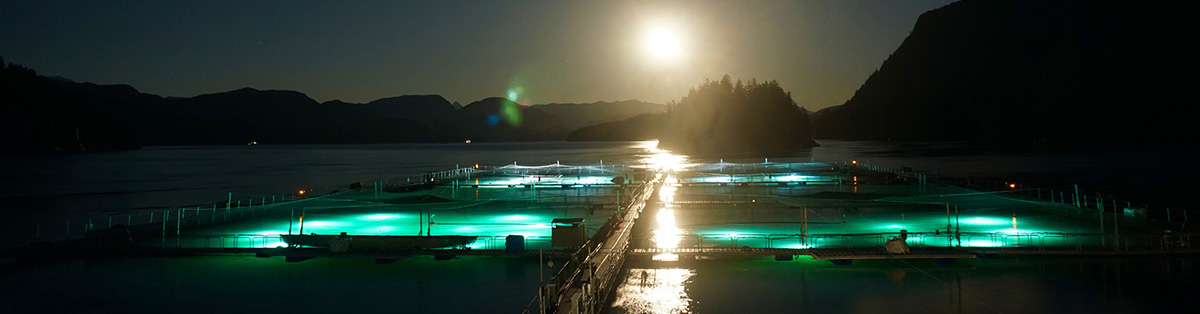
How Underwater Fish Lights Improve Nighttime Water Visibility Around Docks
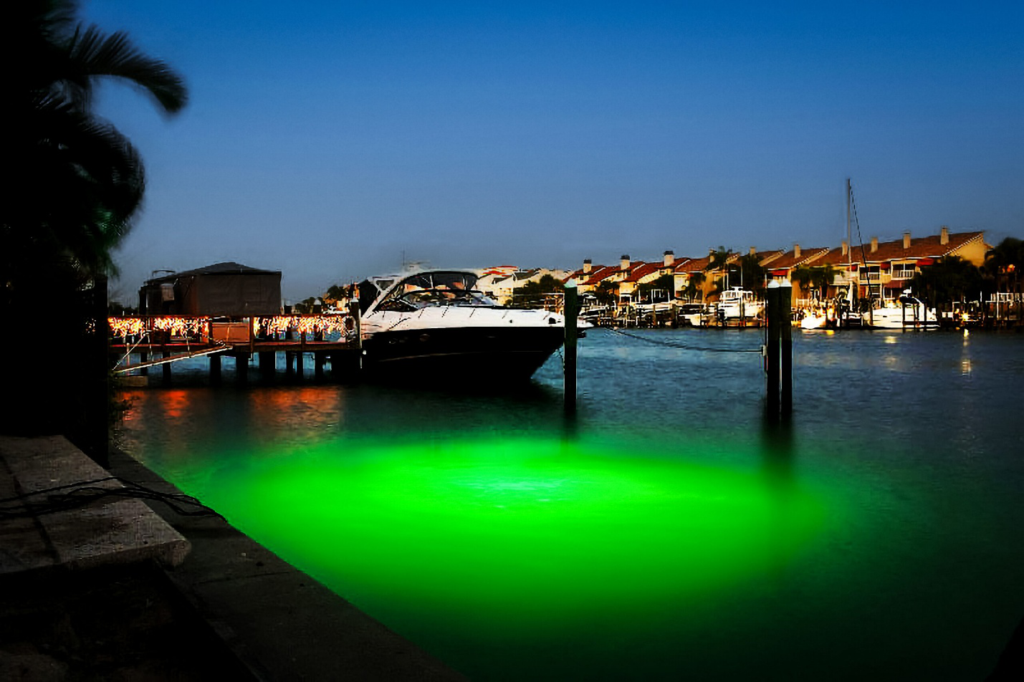
When the sun goes down, a dock doesn’t lose its purpose; it just changes character. What was once a simple access point to the water becomes something quieter, more visual, and in many ways more active beneath the surface. That shift is where underwater lighting starts to matter.
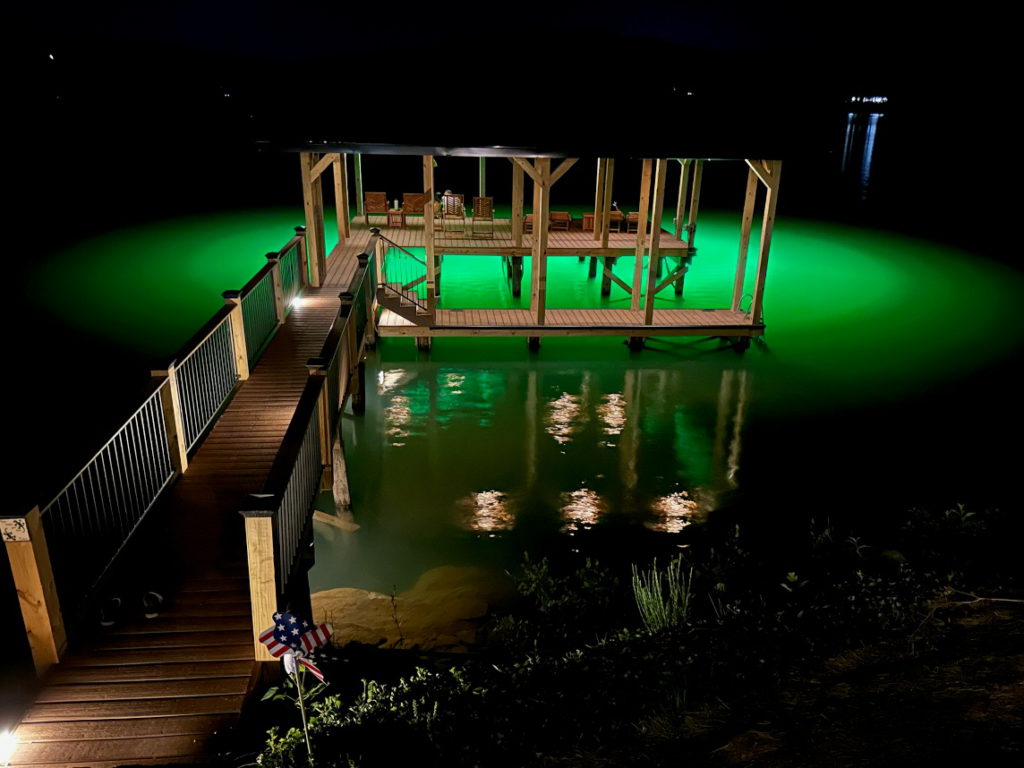
In recent years, underwater fish lights have become a common feature around dock environments where visibility at night is part of the experience. Instead of looking out over dark, unreadable water, dock owners can introduce controlled illumination beneath the surface that makes the surrounding area easier to see and more visually engaging after sunset.
A large part of that visibility comes from underwater LED lights designed specifically for submerged installation. Around docks, these lights are typically positioned to illuminate the water immediately surrounding the structure, helping define edges, movement, and underwater depth in a way that isn’t visible during the day. In most dock setups, green underwater lighting is the primary output, chosen for its clear visibility in water-based environments.
With proper placement, underwater dock lights can help shape how the entire waterfront feels at night. The water becomes part of the dock experience rather than something that disappears into darkness. This is especially noticeable in areas where people spend time outdoors in the evening, as the illuminated water adds a new layer of visibility around the structure itself.
The goal is to keep things practical and grounded in real dock use, how these systems are actually installed, how they behave in water, and how they support nighttime visibility around waterfront structures.
Understanding How Underwater Fish Lights Work Around Docks
At a dock, lighting behaves differently than it does on land. Water changes everything—how light spreads, how far it travels, and even how clearly it’s seen from the surface. That’s why underwater fish lights aren’t just placed randomly under a dock. Their performance depends heavily on how they’re installed, how deep they sit, and what kind of water they’re working in.
What Underwater Fish Lights Are Designed to Do
At their core, underwater fish lights are built to illuminate the water directly surrounding a dock structure during nighttime hours. Once installed below the surface, they create a visible lighting zone that helps define the underwater area that would otherwise fade into darkness after sunset.
In most dock setups, underwater LED lights are positioned so the illumination spreads outward from the structure rather than pointing in a single direction. This creates a wider visual field beneath and around the dock, making nearby underwater movement easier to notice from above the surface.
How Light Moves Through Water Near a Dock
Unlike lighting in open air, underwater lighting is shaped by resistance and movement. When underwater LED lights are installed around docks, the surrounding water becomes the medium that controls how the light behaves.
Several factors influence how that light appears:
- Water clarity: Clear water allows light to travel farther, creating a broader visible area. In cloudier water, the illuminated zone becomes more concentrated closer to the fixture.
- Water movement: Currents, tides, or surface motion can shift how light is distributed, sometimes creating a softer or uneven glow pattern around the dock.
- Dock structure interference: Pilings, beams, and platforms can partially block or redirect light, shaping the visible coverage in different directions.
Because of these conditions, no two dock installations look exactly the same once the lights are active. The same underwater fish lights setup can produce slightly different visual results depending on where and how it is installed.
Strategic Placement of Underwater Dock Lights
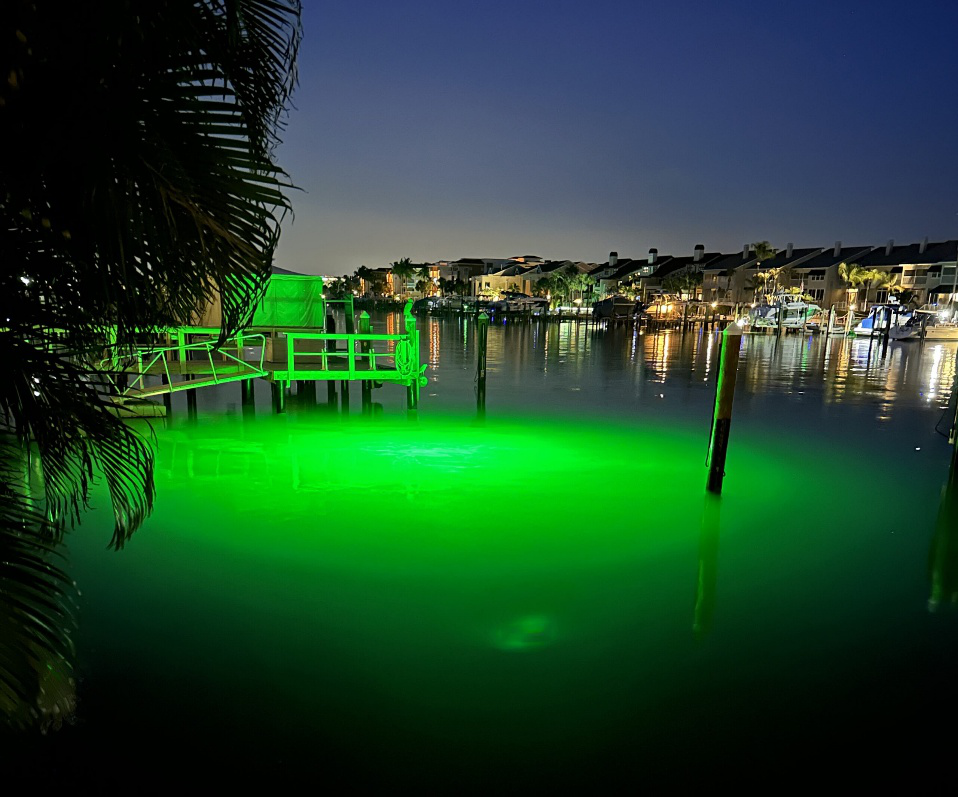
When it comes to dock lighting, placement is often more important than the light itself. Even well-designed underwater dock lights can underperform if they are not positioned with the surrounding structure and water conditions in mind.
Instead, the goal is to build a lighting pattern that feels balanced, controlled, and consistent around the dock area.
Common Dock-Based Installation Layouts
Most underwater fish lights installed around docks follow a perimeter-based approach. This means fixtures are placed along the outer edges of the dock structure, where they can illuminate the surrounding water without being blocked by the dock itself.
Some dock setups focus lighting closer to where people regularly walk or gather, while others extend illumination slightly farther outward to cover a wider underwater area. The exact layout depends on how the dock is used and how much surrounding water visibility is desired at night.
With underwater LED lights, even small changes in placement can affect how the illuminated area appears. Moving a fixture just a short distance can shift the visible spread of light, especially in shallow water environments where reflection and absorption are more noticeable.
Depth and Angle Considerations for Visibility
Depth is one of the most important factors when positioning underwater fish lights. Fixtures placed closer to the water surface tend to create a more immediate, concentrated glow near the dock, while deeper placements can allow light to spread differently through the surrounding water column.
Angle also plays a role in how light is distributed. A fixture pointed slightly outward from the dock may extend visibility into open water, while a more downward-facing position can concentrate illumination closer to the dock’s base.
Because water conditions vary, there is often some adjustment involved during installation. Even within the same dock, different sections may require slightly different mounting approaches to maintain consistent visibility across the entire area.
Creating Balanced Coverage Around Dock Areas
One of the main goals when installing underwater dock lights is to avoid uneven lighting patterns. If fixtures are placed too close together, the result can be overly concentrated brightness in certain areas. If they are spaced too far apart, darker gaps may appear between illuminated zones.
A balanced layout aims to create a smooth transition of light across the underwater area surrounding the dock. This doesn’t mean every section needs identical brightness, but rather that the lighting should feel connected and intentional across the full structure.
In practice, achieving this balance often comes down to spacing, depth, and alignment. When these elements work together, underwater fish lights create a more consistent underwater view around the dock, helping define the space without overwhelming it.
The end result is a dock environment where the water is no longer a dark boundary, but a visible, structured part of the overall waterfront layout.
The Role of Green Light in Underwater Dock Visibility
Around docks, lighting isn’t just about making the water visible—it’s about how that visibility takes shape once the sun goes down. This is where green illumination has become a consistent choice in many underwater fish lights setups. It provides a clear underwater visual field that helps define the space around dock structures without changing the natural feel of the environment.
Why Green Is Commonly Used in Underwater Fish Lights
In dock-based installations, green is widely used as the primary output color for underwater LED lights. One of the main reasons is how it behaves in water. When installed beneath a dock, green light tends to remain visible in a stable and readable way across a range of water conditions.
As underwater fish lights operate below the surface, the surrounding water naturally affects how light appears. In clearer water, the illuminated area may extend further outward from the fixture. In less clear conditions, the visible zone tends to remain closer to the source, creating a more concentrated glow around the dock.
How Green Light Shapes Nighttime Water Appearance
When underwater dock lights are active, green illumination changes how the dock area is perceived after dark. Instead of a flat, dark surface, the water becomes layered with visible depth and movement beneath the surface.
The way this appears depends heavily on environmental conditions. Water movement, tide shifts, and natural clarity all influence how the light spreads. In calmer conditions, the illuminated area may look more uniform. In moving water, the light can appear more dynamic as it shifts with surface and subsurface motion.
The dock structure also plays a role in how green underwater lighting is seen. Pilings, beams, and platform edges can subtly shape the distribution of light, creating variations in brightness across different sections of the same dock.
Practical Use Cases Around Docks
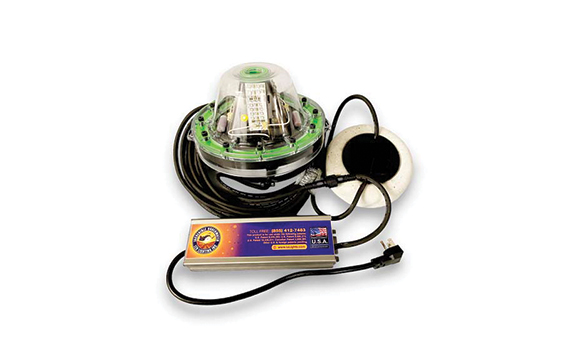
When we talk about underwater fish lights, it helps to move away from theory and look at how they actually function in everyday dock environments. These systems are not abstract lighting concepts; they are used in very specific, practical ways around waterfront structures where visibility after dark matters.
Recreational Dock Visibility at Night
One of the most common uses for underwater dock lights is simply improving how the water looks and feels around a dock at night. Once installed, underwater LED lights create a visible underwater zone that outlines the space surrounding the structure.
For people spending time near the dock in the evening, this changes the experience quite a bit. Instead of looking out into dark, unreadable water, there is a defined illuminated area beneath the surface. The dock feels more visually grounded in its surroundings because the water itself becomes part of the visible environment.
Observing Underwater Activity Near Dock Structures
Another practical use of underwater fish lights is the ability to observe movement beneath the surface near dock structures. Once the water is illuminated, any activity within the lit zone becomes easier to see from above.
The level of visibility depends heavily on conditions like water clarity, depth, and how the underwater LED lights are positioned. In some setups, the illuminated area stays concentrated closer to the dock edges, while in others it extends outward into the surrounding water.
Dock structure also influences what is visible. Pilings, beams, and platform edges can create subtle variations in how movement appears within the lit area. This makes the underwater space feel more layered and defined compared to unlit water.
With well-placed underwater dock lights, the water around the dock becomes more than just a dark surface at night. It turns into a visible part of the environment where movement, depth, and structure can be observed more clearly within the illuminated zone.
These practical use cases are what make underwater lighting a functional part of many dock setups, not just a visual enhancement.
Installation Considerations for Underwater LED Lights
Installing underwater LED lights around a dock is less about a single “right way” and more about building a setup that fits the structure, the water conditions, and how the space is actually used. A good installation starts on paper, long before anything is placed in the water.
Planning Fixture Placement Before Installation
Before installing underwater dock lights, it helps to map out the dock layout in a simple, practical way. This usually starts with identifying the main structural points, edges, corners, and support pilings, since these naturally guide where lighting can be positioned.
From there, the focus shifts to coverage. The question isn’t just “where can we place lights,” but “which areas of water should remain visible at night?” That decision shapes the spacing and placement of underwater fish lights around the structure.
It also helps to consider how the dock is used in real life. Areas where people spend more time may benefit from closer, more intentional lighting placement, while less active sections may require simpler coverage.
Importance of Proper Positioning for Consistent Visibility
Once installation begins, positioning becomes the factor that determines how the lighting actually behaves in the water. With underwater LED lights, even small shifts in placement can change how the illuminated area appears.
Depth is one of the most important variables. A fixture placed slightly higher in the water column may create a different spread compared to one mounted deeper below the surface. Neither is inherently better—it depends on the dock layout and the surrounding water conditions.
Spacing between lights also plays a major role in how underwater dock lights perform. If fixtures are too close together, the illuminated areas can overlap too heavily. If they are too far apart, the water can appear unevenly lit, with visible gaps between coverage zones.
Maintenance and Long-Term Performance Expectations
Once underwater fish lights are installed around a dock, the work doesn’t really end there. Like most equipment that operates below the waterline, these systems need ongoing attention to stay consistent over time. The lighting itself may be stable, but the environment around it is not.
Why Routine Cleaning Is Necessary
One of the most important parts of maintaining underwater LED lights is routine cleaning. Over time, natural buildup from the water begins to collect on the surface of the fixtures. This can include algae, sediment, and other organic material that gradually reduces how clearly light passes through the housing.
If underwater dock lights are not cleaned periodically, the visible output can become less consistent. The light is still functioning, but the clarity and spread underwater may not look the same as it did when the system was first installed.
For that reason, cleaning is not optional; it is part of how the system is maintained over time.
Maintaining Consistent Light Output Over Time
Beyond cleaning, there is also the broader expectation of routine inspection. Dock environments are constantly exposed to changing water conditions, which means underwater fish lights should be checked periodically to ensure they are still positioned correctly and functioning as expected.
The consistency of underwater LED lights over time depends heavily on how well they are maintained. When cleaning becomes part of a regular routine, the lighting tends to remain more predictable in how it appears underwater around the dock.
It’s also important to understand that underwater lighting is not a “set it and forget it” system. Even well-installed underwater dock lights will naturally require attention as environmental conditions change.
By treating maintenance as part of the normal lifecycle of the system, rather than an occasional fix, dock owners can keep underwater visibility more stable and reliable across different seasons and water conditions.
Explore Dock Lighting Options with Incredible Underwater LED Lighting
Choosing and installing underwater LED lights for a dock is really about building a setup that fits the space you already have and the way you use it at night. From planning placement to understanding how underwater fish lights behave in real water conditions, every decision shapes how the dock looks and functions after sunset.
At Incredible Underwater LED Lighting, we focus on underwater lighting designed for dock-based environments. Whether you’re exploring underwater LED lights, learning more about underwater fish lights, or planning a new dock setup with underwater dock lights, the goal is to help you better understand what works in real waterfront conditions—not just on paper.
We also know that long-term performance depends on proper care. Routine cleaning and periodic checks are part of keeping underwater LED lights functioning consistently over time, especially in active water environments around docks.
To learn more about underwater lighting options for your dock, visit Incredible Underwater LED Lighting and explore solutions designed for real-world waterfront use.
Frequently Asked Questions
Where are underwater fish lights typically installed around a dock?
Underwater fish lights are commonly installed along dock edges, near pilings, or beneath dock structures where they can illuminate the surrounding water at night. Placement depends on dock layout, water depth, and the desired visibility area.
Why is green lighting commonly used in underwater LED lights?
Green illumination is commonly used in underwater LED lights because it remains clearly visible underwater in many dock environments. Water clarity, depth, and movement can still affect how the light appears once installed.
Do underwater dock lights require maintenance?
Yes. Underwater dock lights require routine cleaning to remove algae, debris, and natural underwater buildup that can affect visible light output over time. Maintenance frequency depends on local water conditions.
How does placement affect the underwater fish lights' performance?
Placement affects how evenly the light spreads through the water around the dock. Factors like mounting depth, fixture spacing, and positioning angle all influence underwater visibility and overall coverage.
