
Shopping Cart
Smart LED Fixture Solutions for Marine and Waterfront Infrastructure
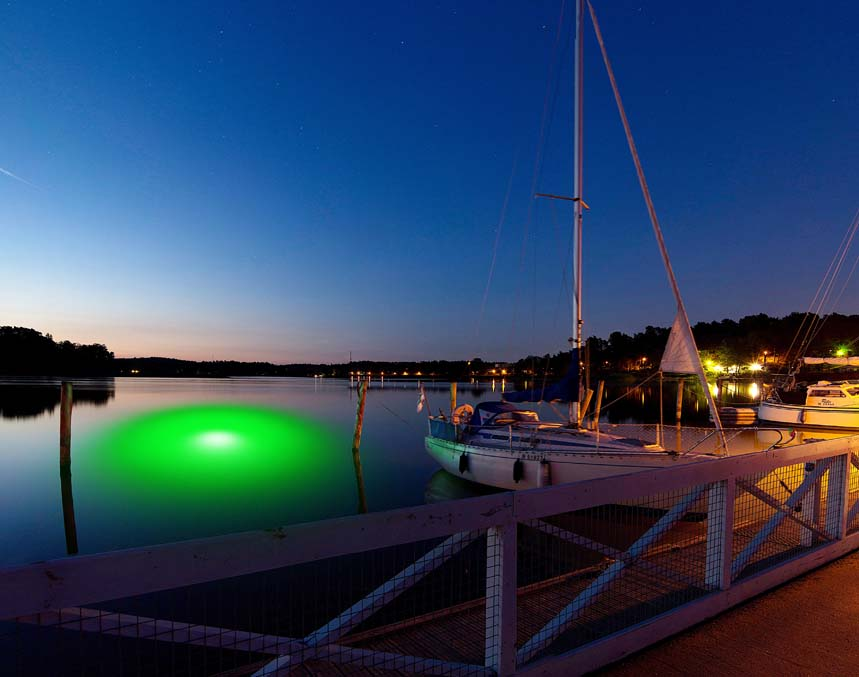
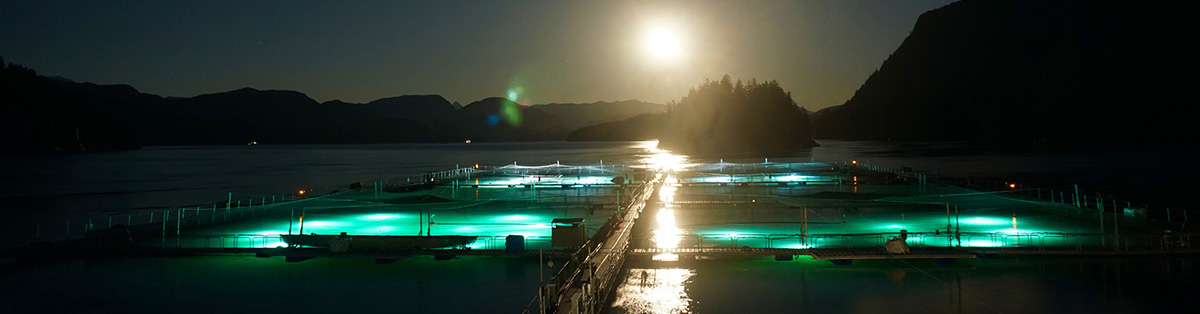
The integration of advanced technology into maritime environments has fundamentally changed how we interact with the water after sunset. For decades, waterfront lighting was limited to high-intensity discharge lamps or simple incandescent bulbs mounted on poles. Today, the landscape is shifting toward intelligent systems. These systems utilize underwater LED lights to provide not only illumination but also a range of functional benefits that were previously unattainable.
Smart marine-grade underwater lighting is no longer a concept of the distant future. It is a present-day reality where sensors, connectivity, and high-efficiency optics converge. By focusing on specialized spectrums, particularly green illumination, property owners and municipal planners can create safer, more engaging, and biologically active environments. This guide explores the technical and practical applications of smart lighting in the marine sector.
The Evolution of Waterfront Illumination

Historically, lighting a dock or a pier was a matter of utility. The goal was to prevent people from tripping or to help boaters find their way back to shore. However, traditional lighting often suffered from high energy consumption and poor light distribution. The introduction of marine underwater lights changed this dynamic by moving the light source from the air into the water.
When light is placed beneath the surface, it eliminates the glare associated with surface-mounted fixtures. This creates a more pleasant visual experience for pedestrians and provides better visibility for navigation. In recent years, the addition of “smart” features has further refined this technology. Modern fixtures can now be controlled via mobile applications, integrated into home automation systems, or programmed to respond to environmental triggers such as motion or ambient light levels.
The Shift to the Green Spectrum

One of the most significant trends in marine lighting is the move toward green-colored illumination. While early underwater systems experimented with various tones, green has emerged as the standard for performance-oriented installations. The preference for green is rooted in the physics of light transmission through water.
Water acts as a filter, absorbing different wavelengths at different rates. Green light, typically falling within the 520 to 570 nanometer range, penetrates water with remarkable efficiency. This allows the light to travel further and appear brighter than other options, especially in coastal or brackish environments where sediment and organic matter are present. By utilizing underwater green lights, waterfront operators ensure that their investment provides the maximum possible visual impact.
Understanding the Science of Green Underwater Lighting

To appreciate why smart LED solutions focus so heavily on the green spectrum, one must look at the biological and physical interactions occurring beneath the waves. The effectiveness of underwater fish lights is not a matter of chance; it is a result of evolutionary biology and light scattering properties.
Wavelength and Water Penetration
In any aquatic environment, the clarity of the water dictates how far light can travel. In many marinas and harbors, the water is not perfectly clear. It contains phytoplankton, suspended solids, and dissolved organic matter. Green light is particularly effective because it is less susceptible to scattering by these particles compared to other wavelengths.
When a high-output green LED is submerged, the light spreads out in a wide, even glow. This creates a large volume of illuminated water, which is essential for both aesthetic beauty and functional safety. For infrastructure projects, this means that fewer fixtures are required to achieve a desired level of brightness, leading to more efficient designs and lower overall energy requirements.
The Biological Food Chain
The most fascinating aspect of underwater fishing lights is their ability to initiate a natural feeding cycle. The process begins almost as soon as the lights are activated.
- Phototactic Response: Microscopic organisms known as zooplankton and phytoplankton are naturally drawn to light sources. Green light is especially effective at attracting these base-level organisms.
- Baitfish Accumulation: As the concentration of plankton increases, small baitfish such as shad, minnows, or sardines move into the illuminated area to feed.
- Predator Arrival: The presence of large schools of baitfish eventually attracts larger predatory species. Depending on the location, this might include snook, tarpon, bass, or trout.
This “living aquarium” effect is a primary reason why private homeowners and commercial resorts invest in underwater fish lights. It provides endless entertainment and creates a thriving ecosystem right at the edge of the dock.
Technical Features of Smart Marine LED Fixtures
A smart LED fixture is much more than just a bulb in a waterproof housing. It is a sophisticated piece of electronic equipment designed to operate in a demanding environment. When evaluating solutions for waterfront infrastructure, several technical factors come into play.
Connectivity and Control Protocols
The “smart” in smart lighting refers to the ability to communicate. Modern marine underwater lights often incorporate various control methods:
- Wi-Fi and Bluetooth: These are common for residential and small-scale commercial docks, allowing users to control their lights via a smartphone app.
- DMX512: This is a professional-grade protocol used in larger installations, such as public boardwalks or luxury marinas. It allows for complex programming, such as synchronized pulsing or fading effects.
- Power Line Communication (PLC): This technology allows data to be sent over existing power cables, which can be useful for retrofitting older docks where running new data lines would be difficult.
Automation and Sensors
Integration with sensors adds a layer of intelligence that improves both the user experience and energy efficiency. For example, a system of underwater dock lights can be equipped with:
- Photoelectric Sensors: These automatically turn the lights on at dusk and off at dawn, ensuring the waterfront is always illuminated when needed without manual intervention.
- Motion Detectors: On private docks, lights can be programmed to brighten when movement is detected on the surface, providing a security feature and a welcoming atmosphere for returning boaters.
- Timers: Users can set specific schedules, such as turning the lights off late at night to conserve power or during specific seasons to align with fish migration patterns.
Applications in Waterfront Infrastructure

The versatility of underwater LED lights allows them to be used in a variety of settings, from private residences to large-scale commercial ports. Each application has its own set of requirements and goals.
Commercial Marinas and Yacht Clubs
For high-end marinas, the goal is often to provide a premium experience for members. Smart underwater green lights can be used to delineate slips, highlight architectural features of the dock, and create a high-end ambiance. When synchronized, these lights can guide large vessels into their berths by providing a clear visual path that is visible even in murky water.
| Feature | Benefit for Marinas |
| Remote Dimming | Reduces light pollution during late-night hours. |
| Grouping | Allows specific sections of the marina to be lit independently. |
| Status Monitoring | Alerts management if a fixture loses power or requires attention. |
| Custom Scheduling | Matches lighting with special events or club hours. |
Public Piers and Boardwalks
In public spaces, safety and aesthetics are the primary drivers. Municipalities often use marine underwater lights to make waterfront areas more attractive to tourists and residents. By creating a bright, green-colored glow along the perimeter of a pier, the water becomes an active part of the landscape rather than a dark, unseen void. This visibility can also assist emergency services in the event of an accident near the water’s edge.
Private Docks and Residential Properties
Homeowners often focus on the recreational aspects of lighting. The use of underwater fishing lights turns a backyard dock into a premier angling spot. Because smart systems allow for easy adjustment, a homeowner can dim the lights for a quiet evening on the patio or turn them to full brightness when they want to observe the marine life gathering below.
Installation Strategies for Smart Underwater Lighting

Proper installation is critical to the performance of any marine lighting system. Because these fixtures operate in a submerged environment, the methodology used to secure and power them must be precise.
Placement and Depth
The depth at which underwater LED lights are installed significantly impacts their effectiveness. Generally, a depth of two to six feet below the mean low-water mark is recommended.
- Shallow Placement: If the lights are too shallow, they may be exposed to the air during extreme low tides, which can lead to overheating if the fixture relies on the water for cooling. It also increases the risk of damage from floating debris.
- Deep Placement: If the lights are too deep, the water column above them may absorb too much of the light, reducing the visible glow on the surface.
For underwater dock lights, spacing is also a key consideration. To create a continuous “curtain” of light, fixtures should typically be placed 10 to 15 feet apart along the length of the dock.
Cable Management and Power Supplies
The cabling for marine underwater lights must be handled with care. Smart systems often require both power and data lines, although many modern units combine these into a single cable.
Pro Tip: Always use high-quality cable ties and mounting clips to secure wires against dock pilings. This prevents the cables from dangling where they could be snagged by boat propellers or fishing gear.
Power supplies should be mounted in a protected, elevated location well above the splash zone. For smart systems, this is also where the control hub or Wi-Fi bridge is typically located to ensure a strong signal to the user’s mobile device.
The Ecological Impact of Green Lighting
As we increase the use of artificial light in marine environments, it is important to consider the ecological footprint. Smart technology provides tools to mitigate potential negative effects while enhancing the local ecosystem.
Supporting Biodiversity
By attracting plankton and baitfish, underwater green lights create a localized boost in biodiversity. This can be beneficial in urbanized areas where natural habitats have been disrupted. The lights provide a consistent food source for predatory fish and can even attract interesting species like rays or manatees in certain regions.
Managing Light Pollution
Light pollution is a concern for many coastal communities. Traditional upward-facing lights contribute to skyglow and can disturb nesting sea turtles or migrating birds. Underwater LED lights are inherently more “dark-sky friendly” because the light is directed downward and sideways into the water. The water itself acts as a shield, containing the light within the aquatic environment.
Furthermore, the “smart” aspect of these fixtures allows for better management. Features like dimming and scheduled shut-offs ensure that the lights are only active when they are providing a direct benefit to humans, leaving the water dark for the remainder of the night.
The Economics of Smart LED Solutions
While the initial investment in smart underwater LED lights may be higher than traditional options, the long-term economic benefits are substantial.
Energy Efficiency
LED technology is inherently efficient, converting a much higher percentage of electricity into visible light rather than heat. When this is combined with smart controls—such as dimming during the middle of the night—the total energy consumption of a waterfront property can be significantly reduced.
Operational Savings
Smart systems reduce the need for manual labor. Instead of a maintenance worker having to walk the length of a pier to check each light, a central dashboard can provide real-time status updates. If a fixture in a set of underwater dock lights experiences an electrical fault, the system can send a notification immediately, allowing for targeted and efficient repairs.
Enhancing the Angling Experience with Smart Technology
For many, the primary draw of marine lighting is the fishing. Underwater fishing lights have revolutionized the way people fish at night. By concentrating the fish in a specific area, the lights remove much of the guesswork.
Targeting Specific Species
Because green light is so effective at attracting bait, it tends to draw in the species that anglers value most. In saltwater, this often includes snook, which are famous for hanging out in the shadows just at the edge of the light beam. In freshwater, underwater fish lights are magnets for crappie and hybrid bass.
Smart Integration for Anglers
Modern fishing lights can be integrated with other smart tools. For example, some systems can be linked to underwater cameras, allowing an angler to see exactly what is swimming around their light from a tablet inside their house. Others can be programmed to pulse at specific frequencies that some believe further stimulate the predatory instincts of certain fish.
Future Trends in Smart Marine Infrastructure
The field of marine lighting is constantly evolving. As we look toward the future, several emerging trends are likely to shape the next generation of marine underwater lights.
AI and Machine Learning
In the near future, smart lighting systems may utilize artificial intelligence to optimize their performance. Imagine a system of underwater green lights that can identify the types of fish swimming nearby and adjust its intensity or pulse pattern to better attract those specific species. Or a system that monitors water clarity in real-time and boosts its power only when the water becomes murkier.
Integration with Autonomous Vessels
As autonomous boats and underwater drones become more common, the role of underwater dock lights will expand. These lights could serve as visual beacons or data transmission points for unmanned vessels, helping them navigate safely into a slip or dock without human intervention.
Sustainable Power Sources
The push for green energy is also reaching the waterfront. We are seeing an increase in solar-powered smart controllers for underwater LED lights. By using a small solar array on the dock to charge a battery bank, the entire lighting system can operate independently of the grid, reducing both the carbon footprint and the cost of operation.
Choosing the Right Solution for Your Project
Selecting the best underwater LED lights for a marine project requires a balance of several factors. It is not just about the brightness; it is about how that light is delivered and managed.
Key Considerations
- Total Lumen Output: Ensure the light is powerful enough to penetrate the specific water conditions of your location. Murkier water requires higher output.
- Control Interface: Choose a system that matches your technical comfort level. If you want a “set it and forget it” solution, look for robust automation features.
- Wavelength Precision: Not all green lights are created equal. High-quality fixtures use specific LED chips (often Indium Gallium Nitride) to produce a precise green spectrum that maximizes fish attraction and visibility.
- Installation Support: Consider whether the manufacturer provides the necessary brackets, weights, and cable management tools to ensure a clean and functional setup.
Conclusion
Smart LED fixture solutions represent the pinnacle of modern waterfront design. By leveraging the unique properties of underwater green lights, property owners and infrastructure planners can transform dark, inactive water into a vibrant, safe, and ecologically productive environment. Whether the goal is to enhance the prestige of a luxury marina, improve the safety of a public boardwalk, or create the ultimate spot for night fishing, the combination of LED efficiency and smart connectivity offers a solution that is both high-performance and environmentally responsible.
The move toward specialized marine underwater lights is more than just a trend; it is a fundamental improvement in how we manage our coastal and inland waterways. As technology continues to advance, these systems will become even more integrated, efficient, and essential to the identity of our waterfront communities.
Create Your Personal Waterfront Haven with Underwater Dock Lights from Incredible Underwater LED Lighting
Transform your pier with vibrant underwater green lights. Our underwater LED lights and underwater dock lights serve as the perfect underwater fishing lights, creating an incredible living aquarium effect. Install marine underwater lights today and build a spectacular glowing waterfront sanctuary. Shop Incredible Underwater LED Lighting’s inventory today.
Frequently Asked Questions
1. Why is green the preferred spectrum for underwater LED lights?
Green light is utilized because it has a specific wavelength that travels through water more effectively than other options. These Underwater Green Lights offer superior visibility and penetration in various water conditions, making them the most efficient choice for illuminating large areas of marine infrastructure.
2. How do underwater fishing lights help attract marine life?
These underwater fishing lights work by initiating a biological feeding cycle. The green glow from the underwater fish lights attracts microscopic plankton, which subsequently draws in baitfish and larger predatory species, creating a thriving ecosystem directly beneath your fixture.
3. What is the ideal placement for underwater dock lights?
For optimal performance, underwater dock lights should be installed between two and six feet below the mean low water level. Proper spacing of your marine underwater lights every ten to fifteen feet ensures a consistent and overlapping curtain of light along the waterfront.
4. Can these marine underwater lights be automated?
Yes, modern marine underwater lights often feature smart integration. Users can control their underwater LED lights through mobile applications or automated sensors, allowing for custom schedules, light sensing activation, and remote management of the entire system.
