
Shopping Cart
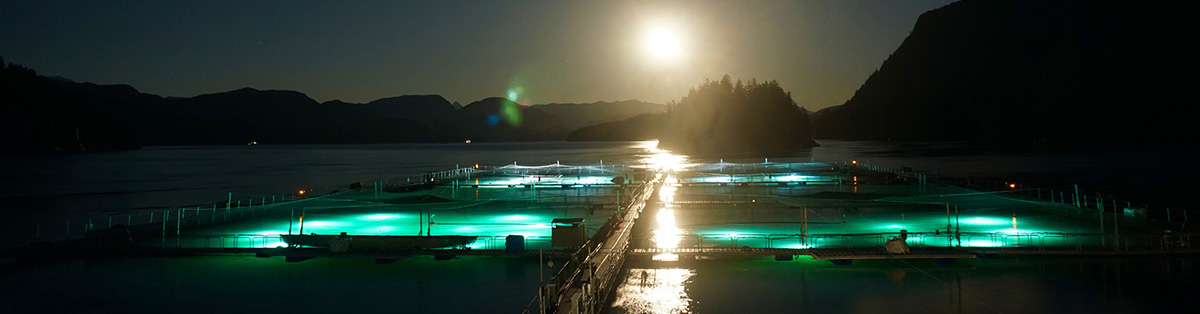
Safer Nights on the Water with Precision Under-Dock Navigation Lighting
Nighttime boating opens the door to an entirely different kind of on-water experience. The quiet shoreline, reflective water, and cooler temperatures make evening outings both relaxing and memorable. Yet reduced visibility also increases risk, especially when maneuvering near docks, pilings, and slips. Even experienced operators can misjudge angles, distances, or underwater obstructions in low light. This is why more waterfront property owners are embracing precision underwater navigation lighting using underwater LED lights and underwater fish lights. These lighting systems operate beneath the water’s surface to illuminate hazards, enhance depth perception, and create safer nighttime conditions for everyone around the dock.
This blog explains how under-dock lighting improves boating safety, where to position lights for the greatest impact, and what maintenance steps ensure long-term reliability. The goal is to present clear, practical guidance for creating a safer and better illuminated dock environment.
The Growing Need for Better Nighttime Dock Safety
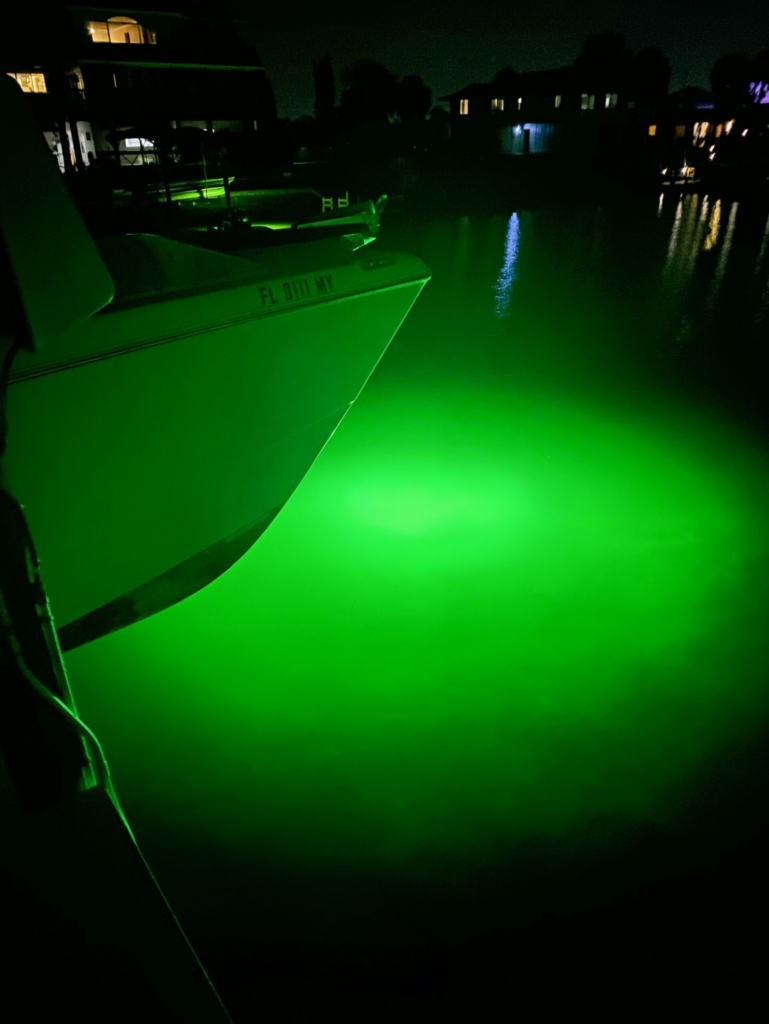
While boating regulations typically emphasize onboard navigation lights, dockside visibility deserves equal consideration. Docks contain multiple hazards that become difficult to detect after sunset. Pilings, floating debris, tie-off lines, ladder rails, submerged steps, and hull extensions all blend into darkness. Without proper lighting, a minor misjudgment can result in hull damage, personal injury, or unintentional impact with dock structures.
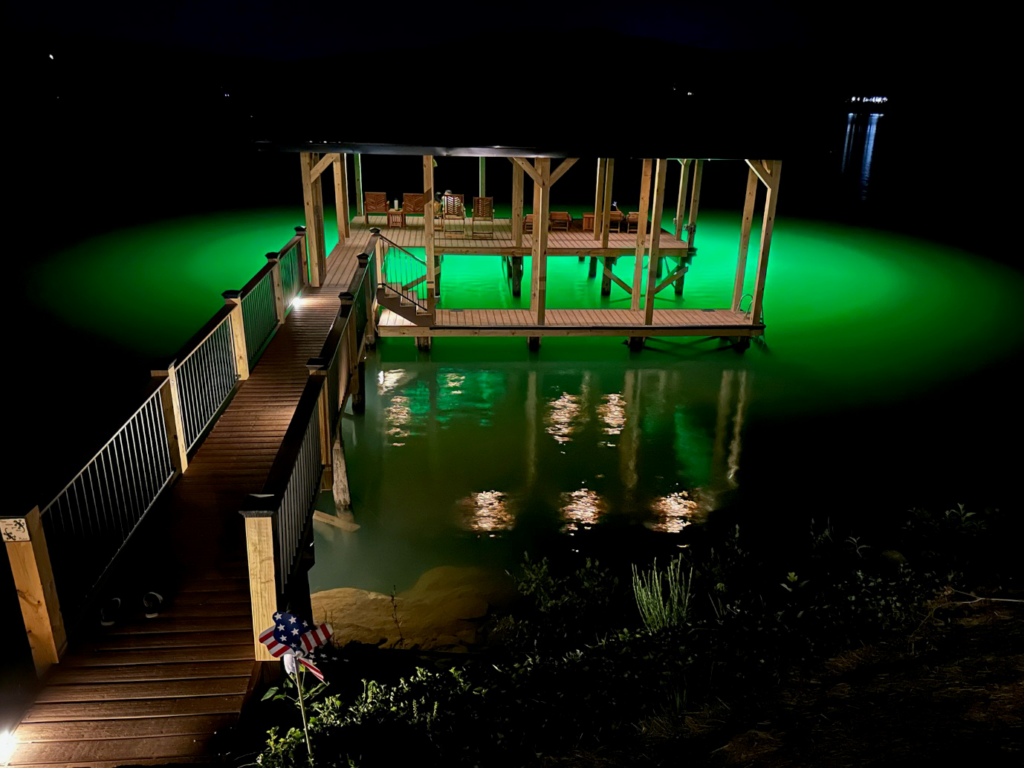
Traditional overhead dock lights brighten walkways but rarely illuminate the underwater zone where most hazards exist. Overhead fixtures also create glare on the water’s surface, which reduces rather than improves nighttime visibility. Installing underwater LED lights or similar systems directly beneath the dock solves both problems by delivering illumination from below. This improves underwater visibility, minimizes glare, and increases navigational predictability for approaching vessels.
How Under-Dock Lighting Enhances Visibility
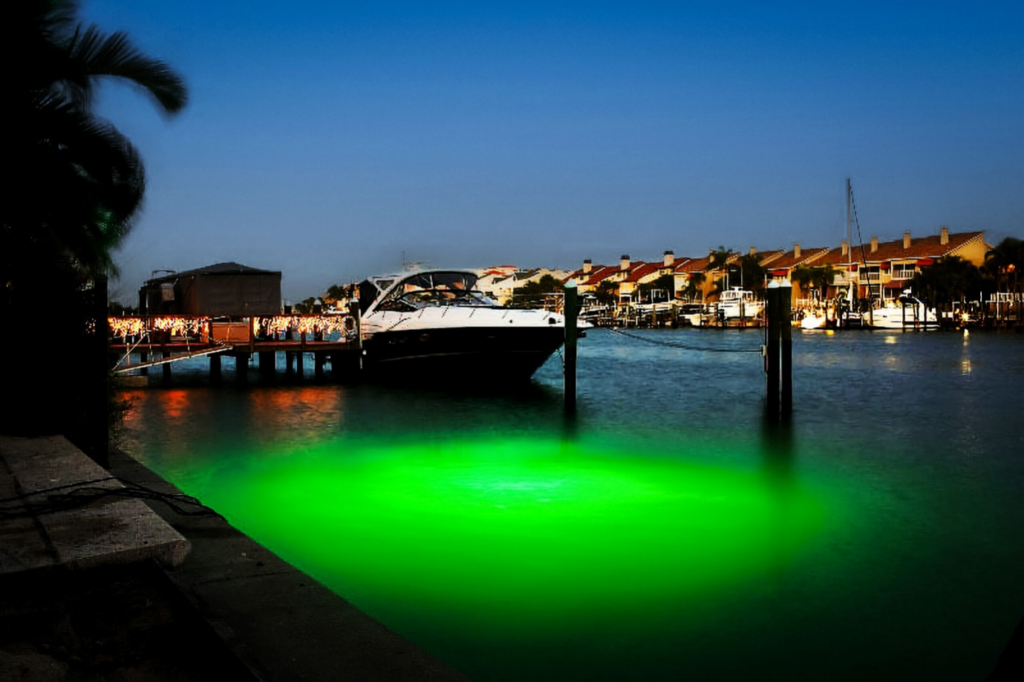
The primary purpose of under-dock lighting is to improve situational awareness during nighttime docking and departure. Underwater LED lights and all related lighting variations spread a controlled glow through the water, revealing the depth, structure, and underwater features that are normally hidden. This expanded visibility benefits both seasoned boaters and newcomers.
Clear Identification of Dock Boundaries
Under-dock lighting outlines the physical perimeter of the dock. When a boater approaches, the illuminated edges make it easier to determine distance, alignment, and closing speed. This reduces scraping, bumping, and unpredictable movements caused by low visibility.
Better Depth Perception in Murky or Low-Light Conditions
Water clarity changes frequently, especially in areas with tides, heavy rainfall, or organic matter. At night, even clear water appears darker and makes depth estimation challenging. Underwater dock lights reveal variations in bottom contour, submerged debris, and drop-offs. The added context allows operators to slow down or adjust the trajectory before getting too close.
Highlighting of Pilings and Support Structures
Pilings are one of the most collision-prone components of any dock. When illuminated with underwater dock lights or underwater fish lights, these vertical structures become highly visible. The halo of light surrounding each piling makes it easier to identify spacing and avoid accidental contact.
Illumination of Steps, Ladders, and Swim Areas
Many docks incorporate ladders, swim platforms, underwater steps, or kayak launches. These features present tripping and collision risks when the surrounding area is dark. Integrating marine underwater lights near entry points ensures swimmers and boaters recognize where each structure begins and ends.
Safer Navigation for Multiple Types of Watercraft
Jetskis, kayaks, paddleboards, pontoon boats, and center consoles all benefit from better underwater visibility. Underwater fishing lights create a safer shared environment for all types of users.
Why These Lights Enhance Precision in Docking Maneuvers
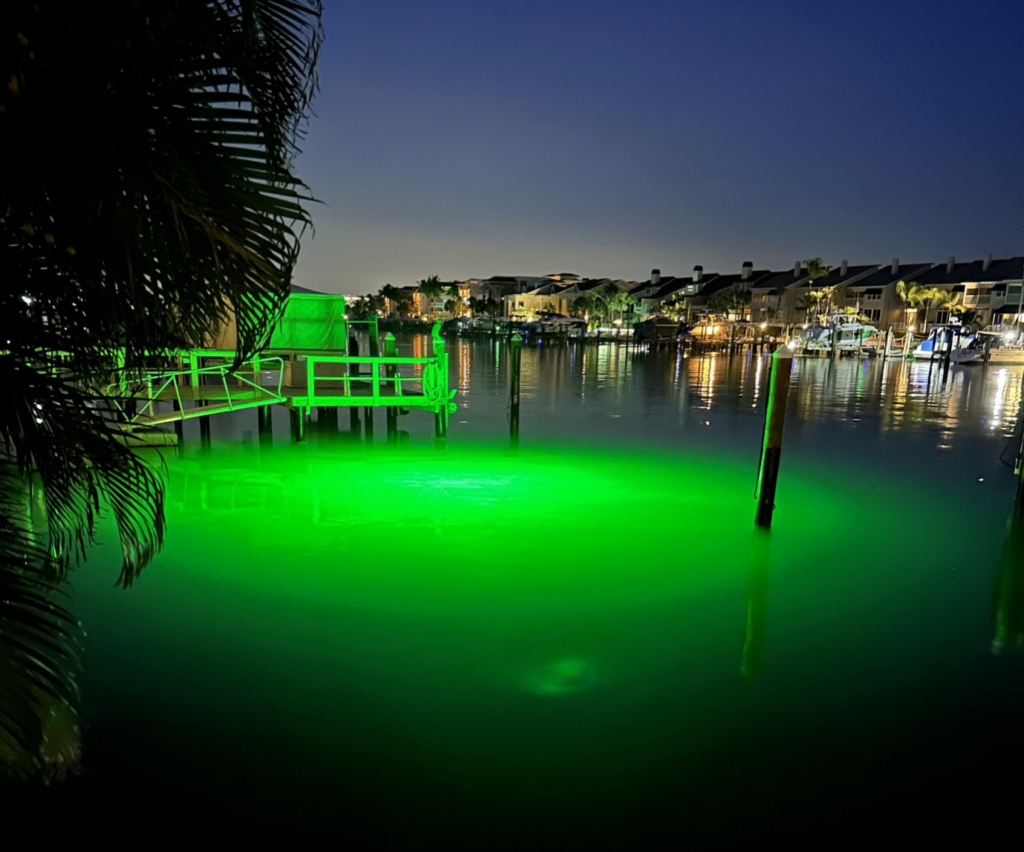
Docking requires a careful combination of judgment, speed control, and alignment. Even slight miscalculations can cause hull abrasions, bent propellers, and costly repairs. Under-dock lighting supports better precision in several important ways.
Improved Visual Reference Points
A well-lit dock gives boaters a consistent set of visual reference points that guide alignment. With underwater LED lights positioned along slip edges, the operator can assess direction, angle, and drift more accurately.
Reduced Guesswork During Approach
Nighttime approaches can feel disorienting because the water surface lacks contrast. Light emanating from beneath the dock gives the operator a clearer sense of direction and movement. This reduces overcorrection, a common cause of accidental collisions.
Easier Handling in Tidal or Wind-Influenced Environments
Tides, currents, and wind gusts can push a vessel off course. Underwater fish lights highlight the precise boundaries of the docking zone, allowing the operator to anticipate drift more effectively.
Strategic Placement for Maximum Safety Impact
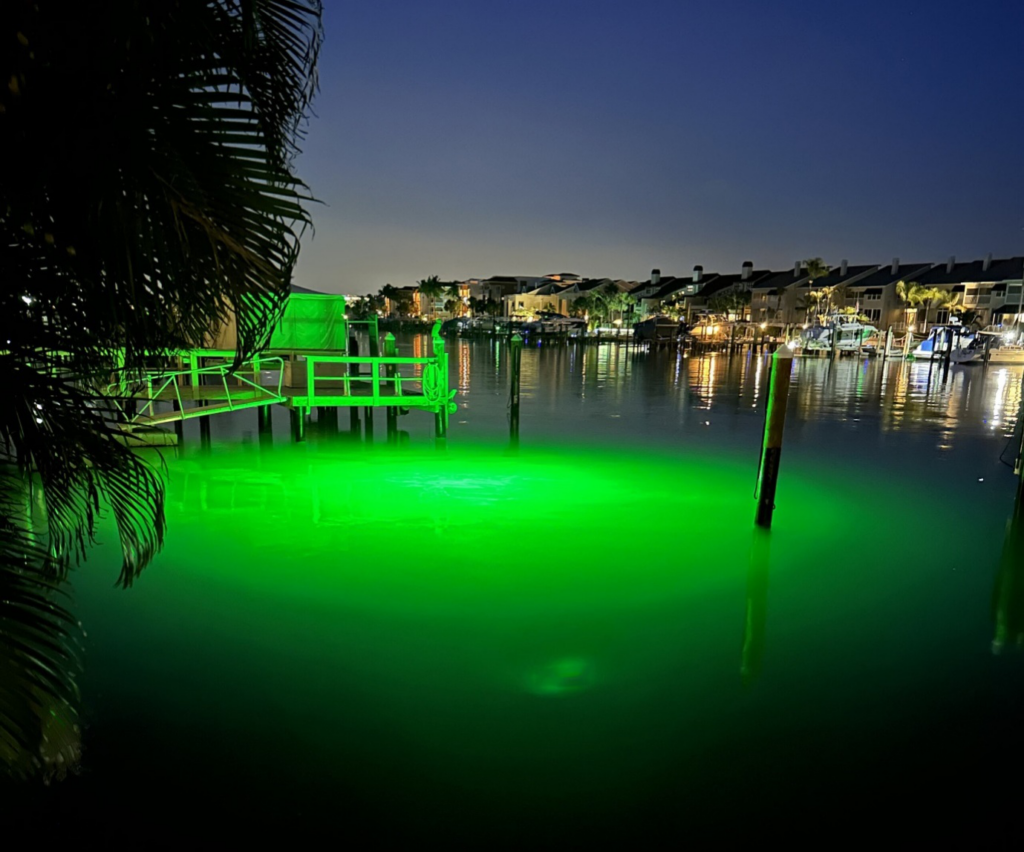
Effective lighting is not only about choosing the right fixture but also about installing it in the correct location. Strategic placement ensures consistent illumination, minimizes shadows, and promotes clearer navigation.
Around Pilings and Structural Support Posts
Pilings should be one of the top priorities for lighting placement. Positioning underwater dock lights on the inward-facing side of each piling creates a glow that outlines the post while reducing dark spots. This is helpful when approaching from different angles, especially in multi-slip docks.
Along the Perimeter of Boat Slips
Boat slips are high-risk zones for nighttime docking errors. By spacing underwater LED lights evenly along each side, you create a path that visually leads boats into the correct position. This approach is especially effective for beginners or guests unfamiliar with the dock layout.
Under Dock Edges and Overhangs
Dock edges can cast shadows on the water when lit from above. Installing underwater green lights or underwater fishing lights beneath these edges counters shadowing and reveals any structural extensions below the waterline.
Near Ladders and Swim Steps
Safety around swim areas is critical when multiple people are in the water. Adding marine underwater lights near ladders ensures swimmers can easily locate their exit point.
At Dock Corners and Turning Points
Dock corners often create blind angles that boaters misjudge at night. Lighting these corners reduces unexpected bumps or hull scrapes when maneuvering into tight spaces.
Approaches and Entry Channels
For docks located in narrow or winding channels, placing underwater fish lights near the approach zone gives operators earlier visual cues, supporting smoother and safer entry.
Environmental and Water Condition Factors to Consider
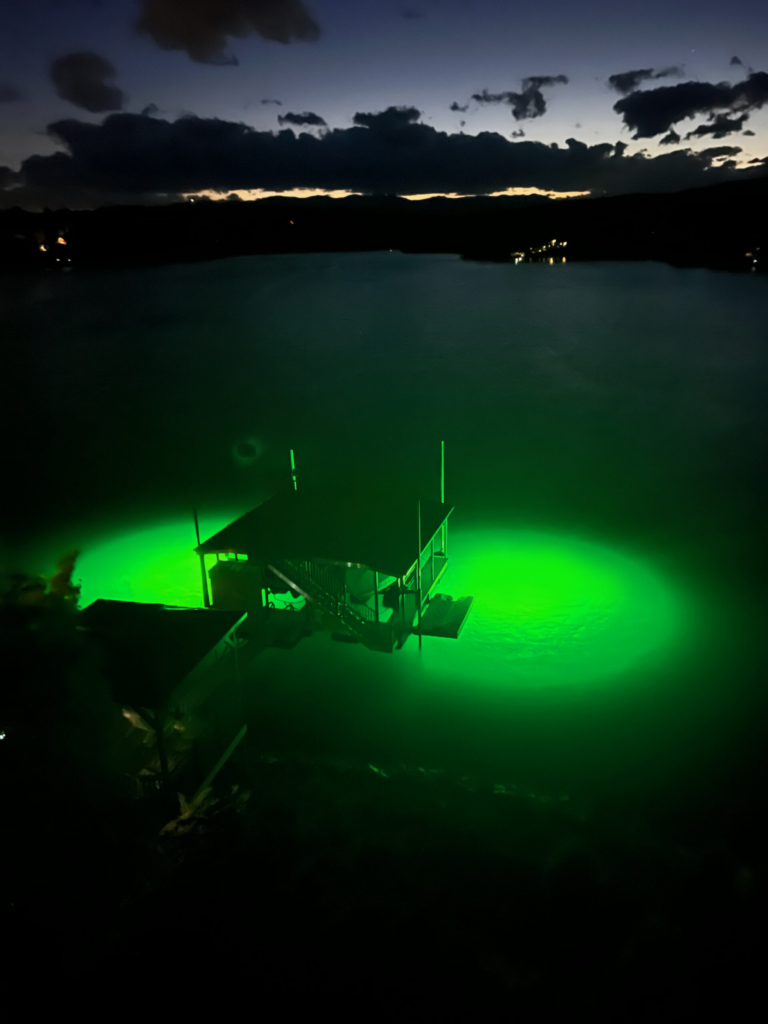
The lighting system’s performance depends on environmental factors unique to your dock. Choosing the right approach requires evaluating these conditions first.
Water Clarity
Clear water allows deeper light penetration, making most lighting types effective. In murky or sediment-heavy water, underwater green lights typically offer better visibility due to their wavelength performance.
Water Movement
Fast-moving or choppy water disperses light differently. In these environments, stronger underwater dock lights help maintain consistent visibility.
Tidal Fluctuation
Lights installed at variable depths ensure continued illumination regardless of tide level. Positioning lights slightly deeper helps avoid exposure during low tide.
Marine Growth and Fouling Patterns
Warm or nutrient-rich water promotes algae and barnacle growth. Frequent maintenance ensures underwater LED lights maintain full brightness.
Safety Benefits for All Waterfront Users
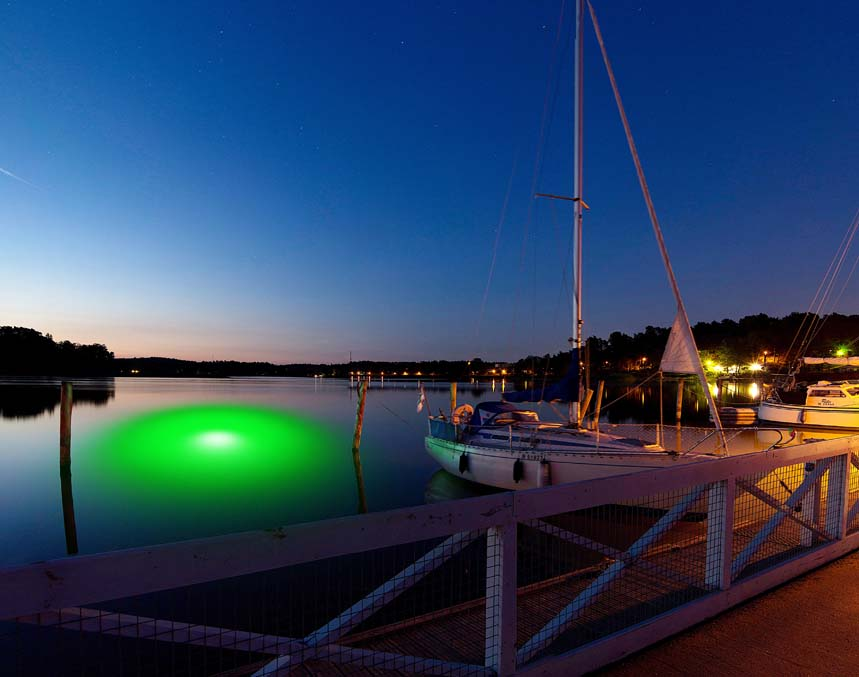
While boaters are the primary beneficiaries of under-dock lighting, the enhanced visibility improves safety for everyone at the water’s edge.
Families and Guests
Visitors unfamiliar with the dock layout often struggle in low light. Underwater fishing lights make edges, steps, and deep areas easier to identify, reducing slip-and-fall incidents.
Anglers
Night fishing becomes safer and more enjoyable when underwater green lights illuminate lines, hooks, and underwater structures. Reduced fumbling leads to fewer injuries.
Swimmers
Underwater fish lights improve orientation, revealing depth changes, ladders, and other swimmers nearby.
Pets
Dogs often wander close to the edge at night. Improved visibility helps prevent accidental falls into the water.
Marina Staff
For marinas, enhanced illumination reduces liability risks, improves customer satisfaction, and helps employees manage nighttime operations more efficiently.
Maintenance for Reliable Long-Term Illumination
To keep underwater dock lights functioning at peak performance, routine maintenance is essential. A well-maintained system delivers consistent illumination and extends the lifespan of your investment. Since these fixtures operate in an environment that exposes them to constant moisture, shifting temperatures, and organic growth, establishing a structured maintenance schedule is one of the most effective ways to protect both safety and lighting quality.
Regular Cleaning
Algae, salt, and mineral buildup can reduce light output significantly. Clean lenses every few weeks with a soft sponge or cloth and a marine-safe cleaner. In high-salinity or warmer waters, more frequent cleanings may be necessary to prevent haze that diminishes illumination.
Inspection for Marine Growth
Barnacles and algae can harden on the surface, diminishing brightness over time. Remove buildup gently to avoid scratching the lens. If growth becomes difficult to remove, soaking the fixture in a mild descaling solution may help restore clarity.
Wiring Checks
Examine wiring for wear, corrosion, or abrasion. This is especially important for saltwater environments, where corrosion develops quickly. Look for loose connections or cracked insulation that may compromise performance or create electrical hazards.
Mount Integrity Assessment
Verify that each fixture remains firmly attached. Loose installations can shift or detach due to water movement or boat wake. Reinforcing mount points before they weaken prevents unnecessary wear on cables and lenses.
Nighttime Function Testing
Inspect the dock after dark monthly to ensure all lights illuminate the correct areas without flickering or dimming. Nighttime testing allows you to spot misalignment, uneven brightness, or changes in beam spread that may not be obvious during the day. Regular observation ensures your lighting system continues to deliver the dependable visibility required for safe nighttime navigation.
Energy Efficiency and Cost Savings
Underwater LED lights and similar systems provide long-term cost savings due to lower energy consumption and extended lifespan. LEDs draw significantly less power than halogen bulbs and require fewer replacements. In addition, strategically placed lighting reduces the need for multiple overhead fixtures, lowering electricity usage. When paired with timers or photocells, these systems operate only when needed, which enhances efficiency and limits unnecessary runtime.
Another factor contributing to cost savings is the reliability of the fixtures themselves. High-quality underwater dock lights are engineered to withstand exposure to saltwater. Their resilience reduces the frequency of repairs and replacements, minimizing lifecycle costs. For dock owners who rely on lighting throughout the boating season, these attributes translate into predictable operating expenses and fewer maintenance disruptions.
The efficiency benefits often extend to property value, as well-maintained and well-lit docks appeal to future buyers seeking both safety and aesthetics. Energy-efficient lighting can also be viewed as a low-maintenance amenity, signaling that the property has been thoughtfully cared for. In many waterfront markets, the presence of reliable underwater green lights or underwater fish lights is considered a desirable enhancement that supports recreation, convenience, and long-term cost control.
Additional Advantages Beyond Safety
While safety is the primary focus, underwater dock lights offer a range of secondary benefits that enhance overall waterfront enjoyment.
Enhanced Waterfront Ambience
A dock illuminated from below creates a visually striking nighttime scene. The glowing water enhances gatherings, parties, and evening relaxation.
Improved Visibility for Wildlife Activity
Underwater fish lights attract baitfish and larger species, creating natural entertainment for guests who enjoy watching marine life.
Deterrence of Unwanted Activity
Well-lit docks discourage trespassing, unauthorized boat access, and theft by increasing nighttime visibility in and around the area.
Elevated Property Perception
A dock equipped with underwater green lights or marine underwater lights signals care, modernization, and commitment to safety, which contributes to higher perceived property value.
Steps for Choosing the Right Lighting System
Every dock is different in layout, water conditions, and usage patterns. Selecting the best system involves a structured approach.
Evaluate Dock Size
Larger docks require consistent spacing of lights to ensure even illumination. Smaller docks can achieve good coverage with fewer fixtures.
Identify Your Primary Goals
Safety, fishing appeal, aesthetic enhancement, and depth visibility may influence which type of fixture intensity or color you choose.
Consider Electrical Requirements
Low-voltage systems are common and safer for water installations. Ensure compatibility with your dock’s power source.
Select Fixtures Designed for Submersion
Look for waterproof ratings and corrosion-resistant materials tailored for marine use.
Balance Light Output with Neighbor Considerations
Ensure lighting is bright enough for safety but not intrusive to neighboring properties.
Precise Installation Practices
Proper installation ensures optimal performance and longevity.
• Maintain a consistent depth for uniform illumination.
• Use stainless steel or marine-grade mounting hardware.
• Seal all electrical connections with waterproof materials.
• Avoid areas exposed to direct impact from waves or boat wakes.
• Test each fixture before final placement.
For docks requiring AC connections, hiring a licensed marine electrician is strongly recommended.
A Smarter, Safer Approach to Nighttime Docking
Integrating underwater LED lights creates a safer and more predictable nighttime boating environment. These lighting systems improve underwater visibility, highlight dock boundaries, enhance depth perception, and support smoother navigational decisions. When strategically placed and properly maintained, they contribute to fewer accidents, reduced property damage, and more confident nighttime operation.
Safety improvements extend to swimmers, anglers, families, and pets as well. Beyond functional benefits, under-dock lighting enhances aesthetics, attracts marine life, and elevates the overall waterfront experience.
Investing in well-designed, well-placed lighting is one of the most effective ways to improve nighttime boating safety. With thoughtful planning and routine maintenance, these systems provide lasting value and peace of mind.
Make Your Dock Beautiful and Safe with Underwater LED Lights from Incredible Underwater LED Lighting
Enhance waterfront safety, boost nighttime visibility, and elevate your dock’s appeal with high-quality underwater LED lights from Incredible Underwater LED Lighting. Enjoy energy efficiency, long-lasting performance, and reliable illumination from marine underwater lights that transform your dock into a stunning, secure space. Contact us today to upgrade your waterfront experience.
Frequently Asked Questions
1. What are underwater lights for?
Underwater lights are used to illuminate docks, boats, and waterfront areas for increased safety, visibility, and aesthetics. They also enhance nighttime ambiance and can attract marine life, making them popular for fishing enthusiasts and waterfront homeowners.
2. What is the best underwater light to attract fish?
High-quality LED underwater lights with strong output and wide beam angles are best for attracting fish. Submersible green LED lights are especially effective because they penetrate water well and draw in baitfish, which in turn attract larger species.
3. What color light attracts fish?
Green is the most effective color for attracting fish due to its ability to cut through murky water and promote plankton growth.
4. How many lumens for underwater lights?
For effective underwater illumination, 1,500 to 10,000 lumens is typical, depending on water clarity, depth, and desired visibility. Larger docks or deeper waters may require higher lumen output for optimal performance.
