
Shopping Cart
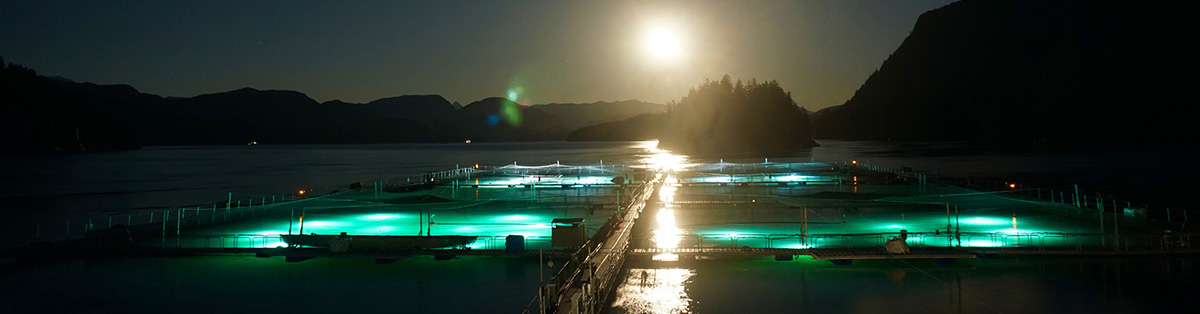
How Underwater LED Lights Transform Waterfront Visibility Around Docks
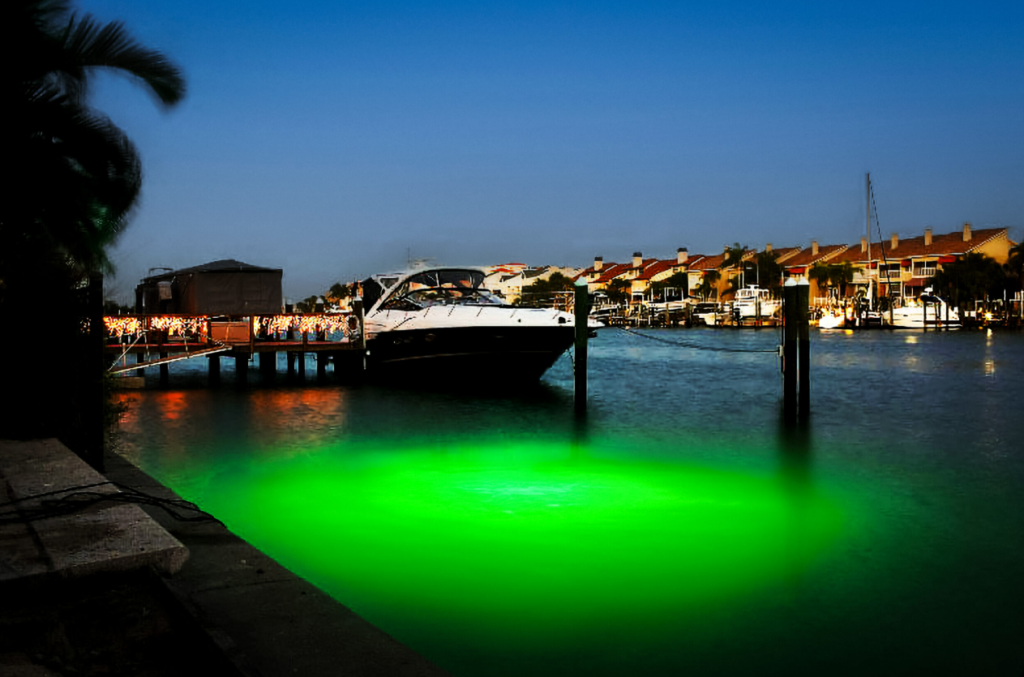
When the sun drops and the shoreline settles into darkness, a dock or beach front space can quickly lose the sense of structure and clarity it holds during the day. I’ve seen how easily the waterline blends into the surroundings at night, making it harder to fully appreciate or even confidently navigate these areas. That shift is exactly where lighting begins to matter in a very practical way.
Over time, I’ve come to understand that lighting placed beneath the water surface does something far more interesting than simply brightening an area above it. It reshapes how the entire waterfront is perceived. Subtle illumination moving through the water creates definition where there was once visual uncertainty, especially around edges, posts, and the transition between dock and open water. This is where marine underwater lights begin to change the experience entirely.
For anyone managing or enjoying a waterfront space, visibility is not just about brightness, it’s about clarity. When the water itself becomes more visually readable, the dock feels more intentional, more structured, and more usable after sunset. The atmosphere shifts from indistinct darkness to something far more engaging, where the water becomes part of the visual design rather than disappearing into it.
In my experience working with waterfront environments, I’ve found that even subtle improvements in underwater visibility can completely change how people interact with a dock or beach front property. It becomes less about avoiding the dark and more about engaging with the space itself, even after nightfall.
Why Waterfront Visibility Matters at Docks and Beach Front Properties
One of the most overlooked aspects of waterfront spaces is how quickly functionality changes once natural light disappears. During the day, a dock feels defined and intuitive, edges are visible, water depth is easier to interpret visually, and movement around the structure feels natural. After sunset, that clarity fades, and even familiar areas can become visually ambiguous.
At docks in particular, this shift matters more than people initially expect. Without clear visual separation between structure and water, it becomes harder to judge distance, edges, and entry points. This isn’t just an aesthetic issue, it directly affects how comfortably the space can be used after dark. I’ve consistently found that visibility is what determines whether a dock remains active in the evening or becomes something people avoid once it gets dark.
This is where underwater dock lights begin to play a defining role. By introducing light beneath the surface, the waterline itself becomes easier to read. Instead of disappearing into darkness, the dock area gains structure again, allowing people to visually reconnect with its boundaries.
How Underwater LED Lighting Enhances Dock Areas
When I look at how a dock functions after sunset, I don’t just think in terms of illumination, I think in terms of structure. A dock is essentially a transition point between land and water, and once visibility drops, that transition becomes harder to interpret. What changes everything is when light is introduced beneath the surface, because it restores definition right where it’s most needed.
With underwater dock lights, the most immediate difference is how clearly the dock boundary comes back into view. Instead of the waterline fading into darkness, it gains a soft but deliberate presence. This makes it easier to visually separate where the dock ends and where open water begins, which naturally improves how the space is experienced after dark.
There’s also a noticeable shift in how the dock itself feels spatially. The area no longer feels like it stops abruptly at the edge, it feels extended into the water through illumination. That extension of visibility creates a more complete visual frame around the structure, which is especially important in low-light conditions when depth perception is reduced.
Transforming Beach Front Properties with Underwater Lighting
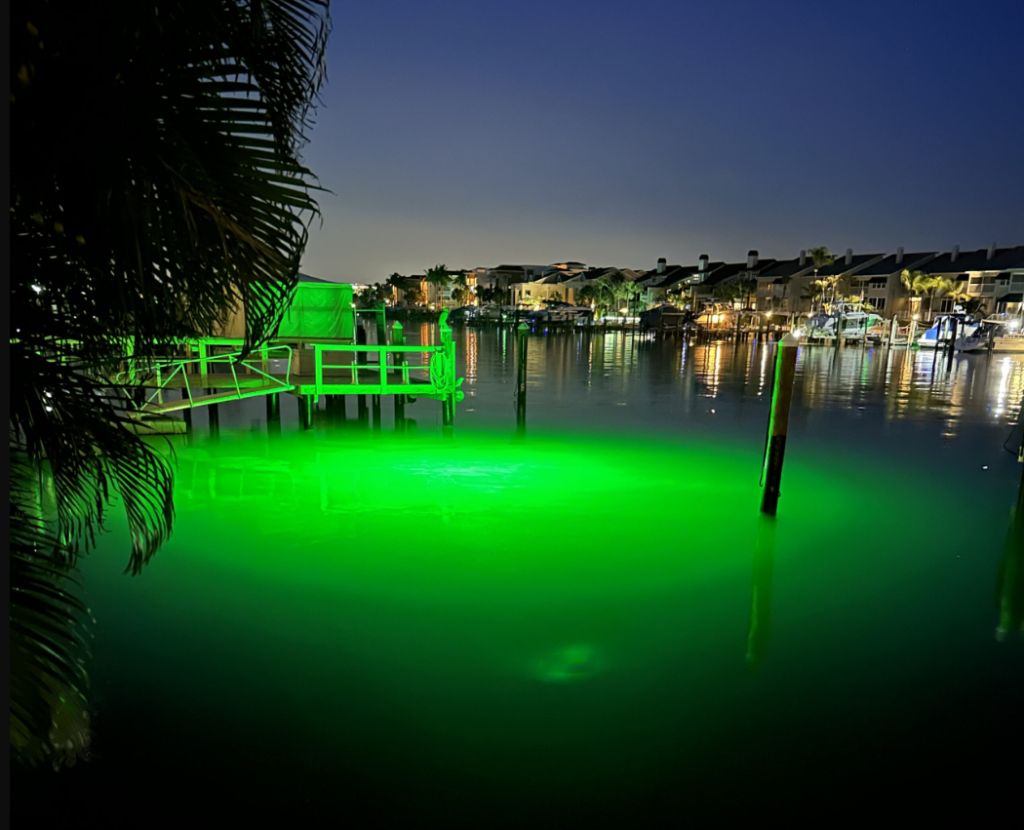
Restoring Depth Along the Shoreline
One of the most noticeable changes comes from how the shoreline begins to regain definition. With Underwater LED Lights, the shallow water near a beach front property becomes more visually readable again. The transition from land to water is no longer abrupt or unclear, it regains a sense of layering that naturally exists during daylight hours.
This added visibility doesn’t overpower the environment. Instead, it highlights the natural structure of the shoreline in a subtle but meaningful way, making the waterfront feel more intentional and visually organized.
Creating a More Engaging Waterfront Atmosphere
There’s also a significant shift in atmosphere. A beach front area that once felt visually flat at night starts to feel more dynamic. Movement in the water becomes easier to perceive, and the shoreline takes on a more active visual presence. This is where marine underwater lights play an important role in shaping how the environment is experienced rather than just seen.
Rather than the space becoming inactive after sunset, it remains visually engaged. The water becomes part of the overall setting instead of fading into the background. That change alone can completely alter how people spend time near the shoreline in the evening.
Visual Continuity Between Land and Water
What I find most compelling is how lighting restores continuity between land and water. During the day, that connection is obvious. At night, it usually breaks apart. With carefully placed underwater illumination, that connection is visually reintroduced, allowing the beach front environment to feel whole again rather than divided by darkness.
The Role of Green Illumination in Underwater Visibility
Why Green Works in Underwater Environments
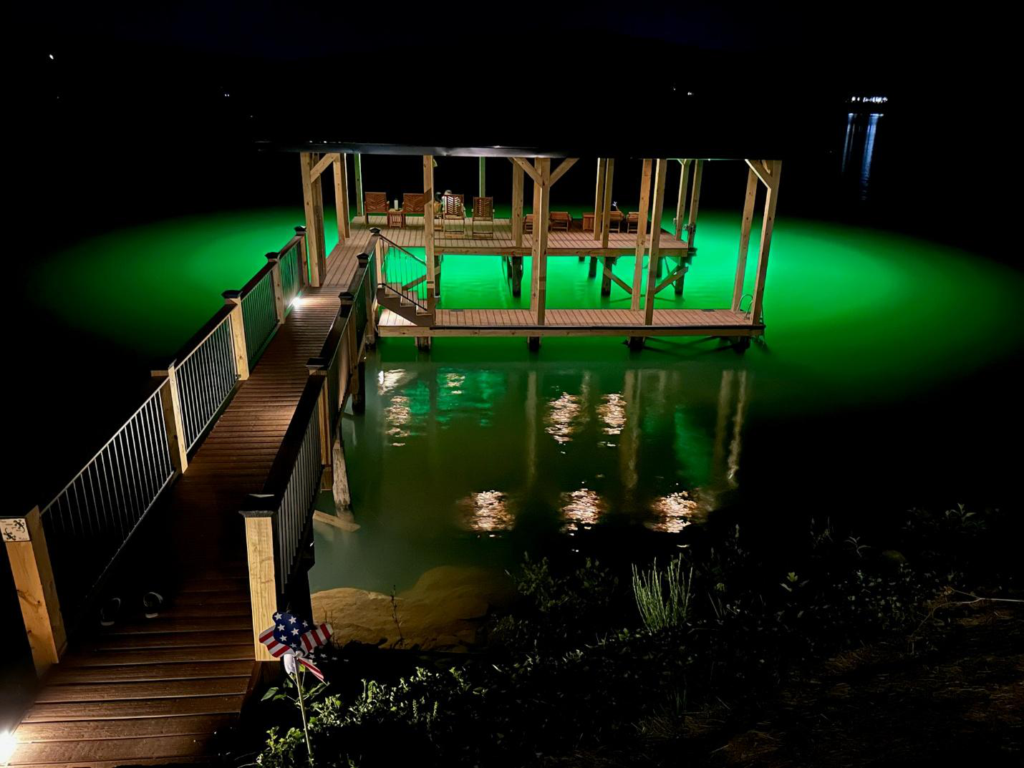
In practical applications around docks and shoreline structures, underwater green lights are often used because they create a strong level of contrast beneath the surface. This contrast helps the eye distinguish shapes and movement more clearly in water, especially in low-light conditions around docks and beach front properties.
Enhancing Clarity Around Dock Structures
Around docks, this type of illumination helps define submerged edges and nearby water zones more clearly. With underwater dock lights using green illumination, the space beneath and around the structure becomes visually mapped in a way that would otherwise be lost at night.
It’s not about making the water look artificial, it’s about restoring a level of visual awareness that is naturally present during daylight but disappears after dark. The dock area becomes easier to interpret, and the water immediately surrounding it feels more structured and readable.
Improving Visual Engagement in Waterfront Settings
Beyond structure, green underwater illumination also changes how people visually engage with the water itself. Subtle movement beneath the surface becomes easier to perceive, which adds a layer of depth to the overall waterfront experience. This is where underwater LED lights play a broader role in shaping how the environment is perceived as a whole.
Underwater Lighting and Nighttime Fishing Activity Near Docks
Nighttime activity around docks changes significantly when visibility beneath the surface is improved. In natural darkness, the water becomes visually opaque, and anything happening just below or near the dock is essentially hidden from view. With targeted underwater illumination, that experience shifts into something more visually active and readable.
Improving Visibility in Dock-Based Fishing Areas
In dock environments where fishing takes place, underwater fishing lights help reveal movement that would otherwise remain difficult to perceive after sunset. Instead of the water appearing as a flat, dark surface, it becomes layered with visible depth. This allows for a clearer sense of what is happening in the immediate underwater zone near the dock.
With underwater fish lights, subtle motion beneath the surface becomes easier to observe, especially in areas where light naturally dissipates quickly. This doesn’t change the environment itself, it simply makes existing activity more visually accessible from the dock level.
Enhancing the Connection Between Surface and Subsurface
One of the most interesting effects of underwater illumination is how it bridges the visual gap between what happens above and below the waterline. From the dock, the surface is no longer the end of visibility, it becomes a transition into a softly illuminated underwater space.
This is where underwater dock lights contribute to creating a more cohesive viewing experience. The dock area feels more connected to the water beneath it, rather than separated by darkness. That connection makes it easier to visually track movement and understand spatial relationships near the structure.
A More Engaged Waterfront Experience After Sunset
What I’ve consistently observed is that improved underwater visibility naturally leads to a more engaged environment around the dock at night. People tend to spend more time observing and interacting with the water when it is visually accessible, rather than hidden.
With marine underwater lights, the water becomes part of the overall experience instead of fading into the background. The dock remains the central structure, but the surrounding water gains presence and definition, making nighttime waterfront activity feel more complete and visually connected.
How Underwater LED Lights Work in Simple Terms
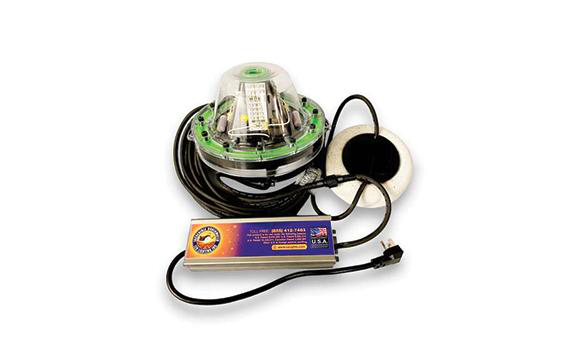
When I explain underwater lighting to someone unfamiliar with how it functions, I usually focus on one simple idea: it’s not about shining light onto the water, but into it. That distinction changes everything about how the waterfront is perceived after sunset.
Light Placement Beneath the Surface
With marine underwater lights, the fixture is positioned below the waterline, which allows illumination to originate from within the environment itself. Instead of reflecting off the surface from above, the light spreads outward through the water, creating a more integrated visual effect.
This positioning is what makes underwater lighting fundamentally different from traditional exterior lighting around docks or shoreline areas. The light becomes part of the water environment rather than something applied to it from outside.
How Light Moves Through Water
Once activated, the light disperses through the surrounding water in a widening pattern. As it travels, it interacts with natural elements in the water, which affects how far and how clearly it can be seen. This is why underwater visibility tends to be strongest closest to the source and gradually softens with distance.
With underwater LED lights, this controlled spread of illumination helps define nearby underwater zones, especially around dock structures and shallow shoreline areas. It creates a visible gradient that the eye can use to interpret depth and proximity.
Creating Readable Space Beneath Docks and Shorelines
The most practical outcome of this process is that underwater space becomes visually readable again. Areas that would normally appear as a single dark field begin to show structure, movement, and variation.
Around docks, this means the submerged environment is no longer visually lost. With underwater dock lights, the water directly beneath and around the structure gains definition, making the entire dock area easier to understand visually.
A Functional Shift in Perception
What I find most important is that underwater lighting doesn’t change the physical environment, it changes how that environment is perceived. The water remains the same, the dock remains the same, but the ability to visually interpret both improves significantly. That shift is what makes underwater illumination such a practical addition to waterfront spaces.
Choosing Underwater LED Lighting for Dock and Beach Front Use
Understanding the Layout of the Waterfront
The first consideration is always the physical structure of the space. A dock, for example, has a very different lighting requirement compared to an open beach front shoreline. With underwater dock lights, placement is typically focused around edges, pilings, and transition points where structure meets water. These areas benefit most from improved visibility because they define how the dock is visually interpreted at night.
At a beach front property, the focus shifts slightly toward shallow water zones where the shoreline transitions into deeper areas. Here, underwater LED lights help restore visual layering that is naturally visible during the day but fades after sunset.
Matching Lighting to the Intended Visual Outcome
Another important factor is the intended visual effect. Some waterfront spaces prioritize clear structural definition, while others aim for a more ambient and visually engaging water surface. In both cases, marine underwater lights contribute by shaping how the underwater environment is perceived from above.
Rather than overwhelming the space, the goal is to create readability, helping the eye understand depth, movement, and structure beneath the surface in a natural way.
Considering Water Conditions Around Docks and Shores
Water clarity and movement also influence how lighting behaves. In still or gently moving water, illumination tends to appear more defined and stable. In more active conditions, light can disperse differently, creating a softer visual spread. This is why understanding the specific waterfront environment is essential before deciding on placement.
With underwater LED lights, the effectiveness of visibility is closely tied to where and how the light interacts with the water itself, especially around dock structures where depth changes quickly.
A Practical Approach to Selection
Ultimately, choosing underwater lighting is about aligning the system with how the space is actually used. Whether it is a dock used for regular evening access or a beach front area designed for nighttime gathering, underwater dock lights and related underwater lighting systems should support visibility in a way that feels natural to the environment rather than imposed on it.
Enhancing Waterfront Experiences with Underwater LED Lights
Across docks and shoreline environments, marine underwater lights help restore that missing structure by bringing visibility back into the water itself. The dock edges become more readable, submerged areas regain definition, and the overall waterfront begins to feel visually complete again after dark. With underwater LED lights, the environment is not altered, it is simply revealed in a way that supports better understanding and engagement at night.
What I find most impactful is how this subtle shift changes the relationship people have with their waterfront spaces. Instead of avoiding low-visibility conditions, the area remains usable, visually connected, and easier to interpret. The water becomes part of the experience again, rather than something that disappears once the sun goes down.
If you are looking to improve nighttime visibility and bring clearer structure to your dock or beach front property, Incredible Underwater LED Lights provides solutions designed specifically for underwater waterfront environments.
Call us today to learn more or get started with the right lighting setup for your dock or beach front space.
Frequently Asked Questions
What are Underwater LED Lights used for around docks?
In my experience, underwater led lights are primarily used to improve how the underwater environment around docks is visually understood after sunset. When natural light fades, the water surface becomes less readable, making it harder to distinguish edges, pilings, and entry points. By introducing light beneath the surface, the dock area regains visual structure. This helps restore clarity around submerged zones close to the dock, allowing the space to feel more organized and visually connected even at night.
Can Underwater Dock Lights improve nighttime visibility?
Yes, underwater dock lights improve how clearly the dock’s surrounding water area can be seen after dark. Rather than illuminating from above, the light originates within the water itself, which helps define the boundary between the dock and open water. This makes it easier to visually interpret the structure and its immediate surroundings. The result is a more readable waterfront environment where spatial edges are less likely to be visually lost at night.
Are Underwater Green Lights commonly used in waterfront lighting setups?
Yes, underwater green lights are commonly used because they create strong contrast underwater, which helps improve visual clarity in low-light conditions. In waterfront environments such as docks and shoreline areas, green illumination makes submerged space easier to interpret by enhancing visibility of movement and structure beneath the surface. This allows the underwater environment to feel more defined rather than visually flat or indistinct after sunset.
Do Underwater Fishing Lights help with underwater visibility near docks?
Underwater fishing lights contribute to better underwater visibility near dock areas by making movement beneath the surface easier to observe at night. In naturally dark water conditions, visibility is limited, and underwater activity is difficult to detect. With lighting introduced below the surface, the water becomes more visually active, allowing subtle motion and structure near the dock to be seen more clearly from above.
Are Marine Underwater Lights suitable for beach front properties?
Yes, marine underwater lights are suitable for beach front properties where the goal is to enhance how the shoreline and shallow water areas are visually experienced after sunset. Instead of relying on external lighting from land, these lights work within the water itself, helping restore the natural layering between land and sea that is often lost at night. This creates a more visually structured and engaging waterfront environment.
