
Shopping Cart
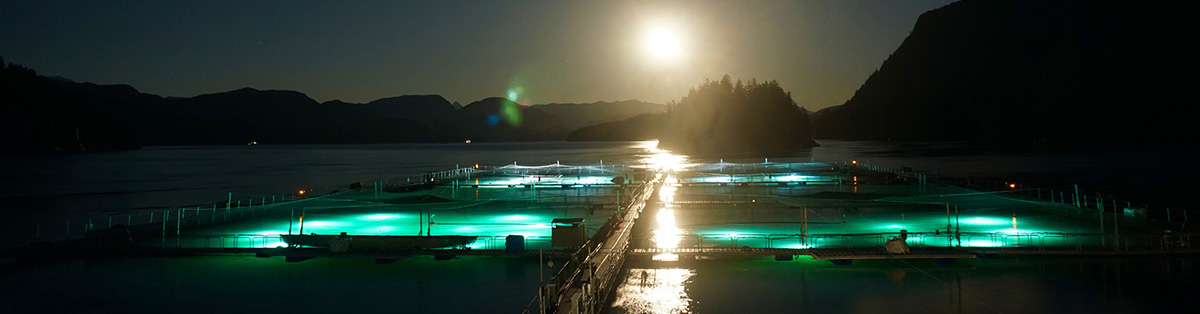
Optimized Illumination: How Green Underwater Dock Lights Improve Phototactic Efficiency for Marine Attraction
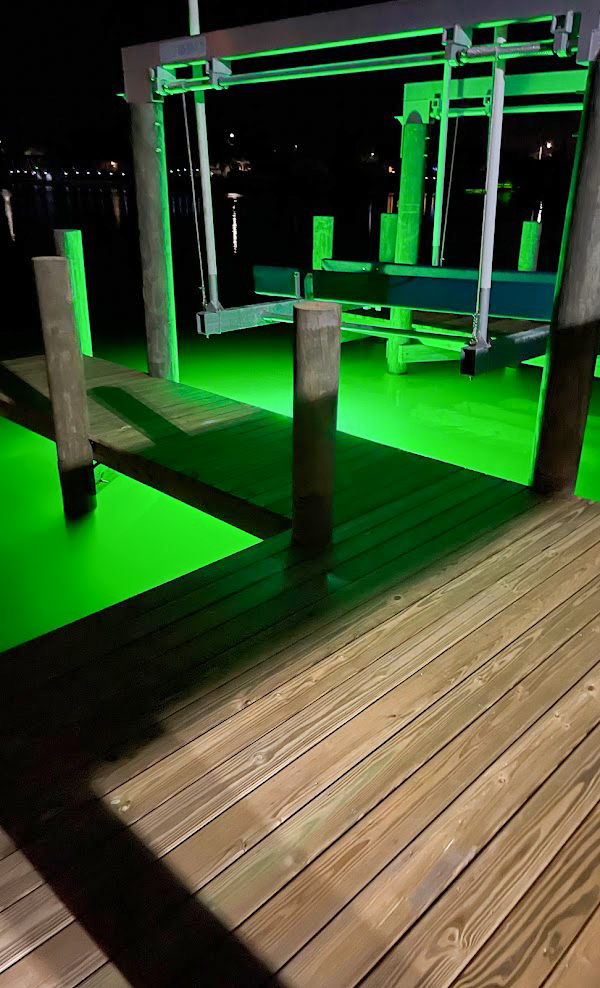
In marine environments, light plays a crucial role in attracting aquatic life. Among the various lighting technologies available today, underwater green lights have proven to be the most efficient for marine attractions. Their specific wavelength output, typically between 520 and 540 nanometers, aligns perfectly with the visual sensitivity range of many fish and plankton species. This makes green light not only visible through water but also biologically attractive, enhancing phototactic responses and improving the visibility of marine habitats.
The color green penetrates water deeper than other visible wavelengths, such as red or orange, maintaining brightness and clarity at greater depths. This property allows underwater green lighting systems to create expansive illuminated zones that draw plankton and baitfish, which in turn attract larger predator species.
How Green Light Enhances Phototactic Efficiency
Phototaxis refers to the movement of organisms toward or away from a light source. In aquatic ecosystems, this behavior is most noticeable in smaller organisms such as phytoplankton, zooplankton, and small baitfish. Green underwater dock lights leverage this natural phenomenon by producing wavelengths that maximize attraction while minimizing visual distortion in water.
Studies have shown that fish and plankton exhibit stronger responses to green light. This is because the spectral sensitivity of most aquatic species peaks within the green spectrum, where energy efficiency and visibility are highest. By aligning light output with these natural sensitivities, underwater green lighting systems enhance overall ecosystem activity around docks, piers, and marinas.
Engineering for Efficiency
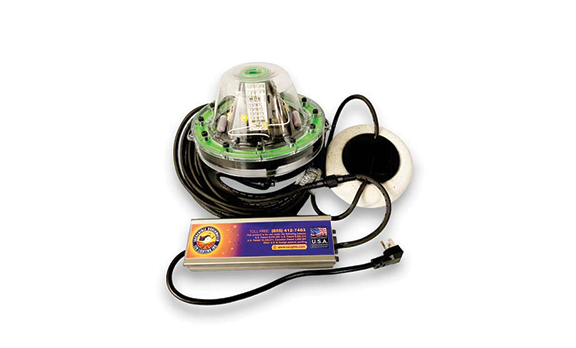
The performance of underwater green dock lights relies not only on color but also on engineering design. Modern lighting systems use energy-efficient LED technology with optimized heat management and waterproof encapsulation. High-quality fixtures feature corrosion-resistant housings, pressure-rated seals, and advanced thermal control to ensure consistent performance in harsh marine environments.
These innovations contribute to extended operational life, reduced power consumption, and minimal maintenance, making green LED systems both sustainable and cost-effective. Furthermore, they produce negligible ultraviolet and infrared radiation, reducing environmental disruption while providing reliable illumination.
Applications Beyond Marine Attraction
While green underwater lighting is commonly used to attract fish, its applications extend far beyond recreation. Industrial and scientific sectors use these systems for underwater inspections, aquaculture, and environmental monitoring. By improving visibility without increasing turbidity or harming marine organisms, green light technology supports both ecological preservation and human productivity.
As research in photobiology and marine optics advances, the use of green underwater lighting continues to evolve, offering an intelligent, sustainable, and highly efficient solution for both marine enthusiasts and professionals alike.
Advance Your Understanding of Marine Life with Efficient Underwater Dock Lights from Incredible Underwater LED Lighting
Discover the power of underwater dock lights and underwater green lights from Incredible Underwater LED Lighting. Enhance visibility, attract marine life, and study aquatic ecosystems more effectively—contact Incredible Underwater LED Lighting today to transform your waterfront experience.
Here’s a well-structured FAQ section addressing those questions clearly and technically, ideal for inclusion in a blog, website, or educational post about green underwater dock lights and fishing illumination systems:
Frequently Asked Questions
What fish are attracted to green light?
Green light attracts a wide variety of fish, particularly baitfish and plankton that are phototactic, meaning they move toward light sources. Common species include shad, minnows, and squid, which in turn draw predatory fish like bass, snook, tarpon, and redfish. The 520–540 nm wavelength of green light is highly visible underwater, making it especially effective for stimulating feeding activity near docks or boats.
Why are there green lights in the ocean?
Green lights in the ocean are primarily used to enhance underwater visibility, attract marine life, and support nighttime activities like fishing, diving, and observation. Their wavelength penetrates deeper, maintaining intensity even in murky or brackish waters. Additionally, underwater green lights are energy-efficient, environmentally safe, and minimize disruption to marine ecosystems compared to brighter white or blue lights.
What color light is best for attracting fish?
Green light is considered the most effective overall. It provides optimal brightness and water penetration, encouraging plankton and smaller baitfish to gather.
Why green light for fishing?
Green light is used for fishing because it efficiently triggers the natural feeding chain. It attracts plankton first, which draws in small baitfish, followed by larger predator species. Beyond biological attraction, green LEDs are highly energy-efficient, allowing for long-lasting operation without overheating or excessive power consumption. This combination of performance, efficiency, and environmental safety makes green the preferred spectrum for night fishing and marine illumination.
