
Shopping Cart
Maximizing Visibility: LED Lighting Strategies for Large Piers and Marinas
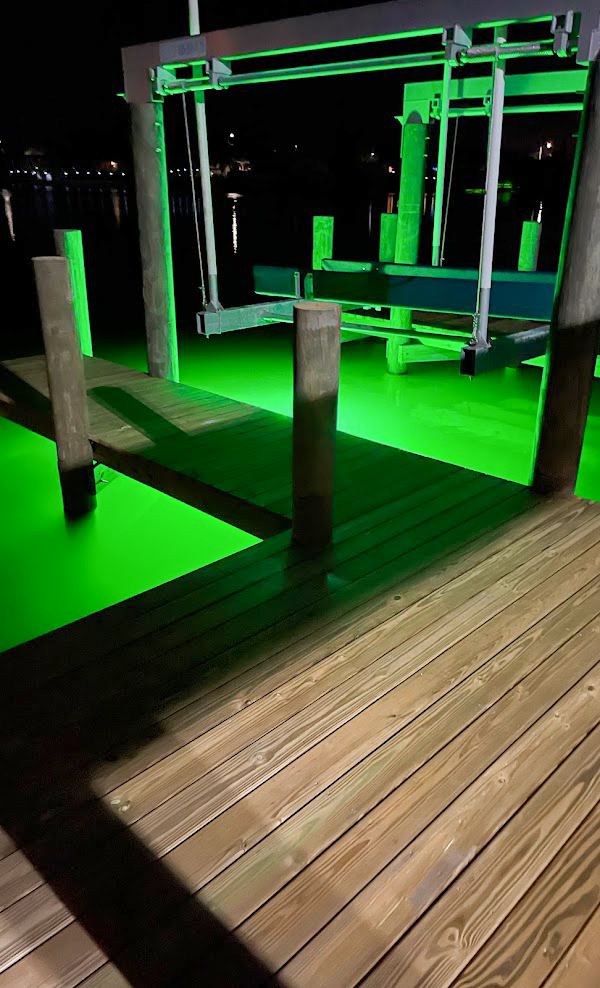
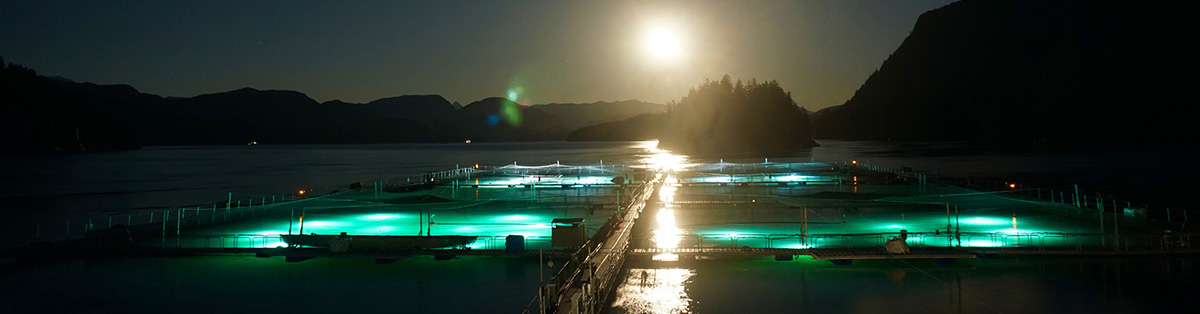
Large piers and marinas operate in complex environments where safety, visibility, aesthetics, and environmental responsibility must coexist. Unlike small private docks, these expansive waterfront structures serve multiple users simultaneously, including boat owners, pedestrians, marina staff, service crews, and visitors. Effective lighting is not simply an enhancement; it is a core operational requirement that influences navigation safety, security, maintenance efficiency, and the overall user experience.1
As the “Blue Economy” grows and waterfronts become more integrated with urban social hubs, the pressure on marina operators to provide world-class facilities has never been higher. Modern LED technology has reshaped how marinas and large piers approach illumination. From walkway lighting and dock edge visibility to underwater LED lights that improve water clarity and nighttime navigation, today’s solutions allow for precision, efficiency, and environmental sensitivity. When thoughtfully planned, LED lighting strategies can dramatically improve visibility without increasing light pollution or disrupting marine ecosystems.
This comprehensive guide explores how marina operators and pier managers can maximize visibility using underwater LED dock systems while maintaining sustainability, regulatory compliance, and long-term operational value.
The Unique Lighting Challenges of Large Piers and Marinas
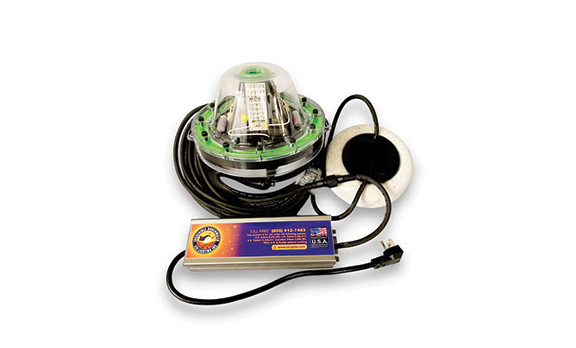
Lighting a large marina is fundamentally different from lighting a residential dock or a standard parking lot. The scale alone introduces challenges related to consistency, power distribution, glare control, and user safety.
Scale and Operational Complexity
Large piers may extend hundreds or thousands of feet, often with multiple fingers, access ramps, slips, fuel docks, and service areas. Marinas may include restaurants, retail spaces, parking facilities, and pedestrian promenades that remain active after dark. Each of these zones has distinct lighting requirements.
The sheer distance involved creates significant voltage drop issues for traditional lighting systems. Furthermore, a single lighting solution cannot meet every need. Instead, layered lighting strategies must be deployed to ensure visibility is adequate where needed and restrained where it is not.
Mixed Traffic and Human Activity
In a high-capacity marina, boat traffic, foot traffic, and service operations frequently overlap. Dockhands maneuver heavy carts, maintenance crews perform high-stakes repairs, and boaters arrive or depart at all hours—often in varying states of fatigue or weather-induced stress.
The risk of “blind spots” is a primary concern. Poor visibility increases the risk of accidents, slips into the water, collisions with pilings, and personal injury. LED lighting allows operators to tailor illumination levels to specific tasks, reducing hazards without creating harsh or overwhelming environments that could ruin the ambiance of a luxury facility.
Environmental Sensitivity and Compliance
Many marinas are located in environmentally protected coastal zones, lakes, or estuaries. Excessive lighting can disrupt fish behavior, migratory birds, and shoreline vegetation. This phenomenon, known as photopollution, is a major focus for regulatory agencies.
Increasingly, local municipalities require lighting plans that adhere to “Dark Sky” initiatives, which demand fixtures that minimize glare, light spill, and continuous nighttime illumination. LED solutions, including underwater dock lights and marine-grade directional fixtures, provide a way to meet these stringent requirements while still maintaining safe operations.7
Why LED Lighting Is the Standard for Modern Marinas
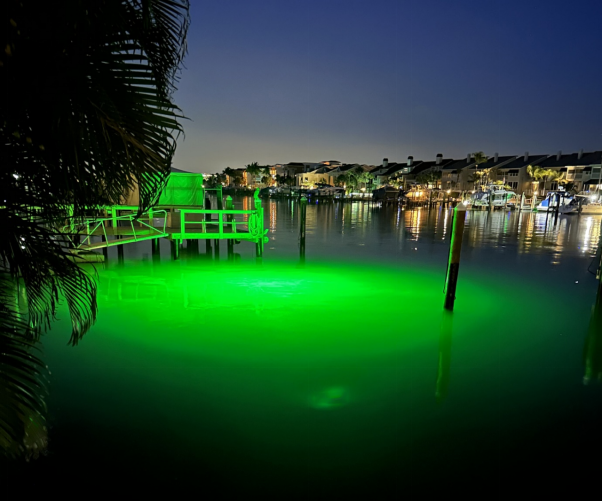
LED (Light Emitting Diode) technology has become the industry standard for large piers and marinas due to its efficiency and flexibility in harsh, salt-heavy environments.
Energy Efficiency at Marina Scale
Traditional marina lighting systems often rely on metal halide or high-pressure sodium (HPS) fixtures. These technologies are notoriously inefficient, converting a large portion of energy into heat rather than light. They also require “warm-up” periods, making them incompatible with motion-sensing technology.
LEDs use a fraction of the energy while delivering equal or better illumination. For large marinas with dozens or hundreds of fixtures, energy savings quickly translate into lower operating costs. In many cases, an LED retrofit can pay for itself in energy savings alone within 18 to 36 months.
Material Integrity and Corrosion Resistance
The marine environment is one of the most corrosive on Earth. Constant exposure to salt spray, high humidity, and UV radiation will destroy standard outdoor lighting in short order.
Modern marine LED fixtures are engineered using:
- 316L Stainless Steel: The gold standard for corrosion resistance.
- Anodized Aluminum: Lightweight and resistant to oxidation.
- IP68 Ratings: Ensuring fixtures are completely dust-tight and can withstand continuous immersion in water.
- Polycarbonate Lenses: High-impact resistance to withstand debris and accidental strikes from boat hulls or equipment.
Longevity and Reduced Downtime
LED fixtures offer lifespans typically ranging from 50,000 to 100,000 hours. This is especially valuable in marina environments where replacing a fixture may require specialized equipment, such as a barge, a lift, or divers. By minimizing the frequency of maintenance cycles, marina managers can redirect labor costs toward more productive facility upgrades.
Furthermore, these extended lifespans represent more than just longevity; they ensure consistent performance over time. Legacy lighting, such as metal halide or high-pressure sodium lamps, suffers from rapid lumen depreciation, often losing half its brightness long before the bulb actually burns out. In contrast, high-quality LEDs maintain their intensity throughout their lifecycle, ensuring that safety standards never dip.
This reliability is paramount in saltwater environments where corrosive salt air and humidity typically degrade traditional electrical seals. By switching to marine-grade LED systems, operators eliminate the logistical nightmare of scheduling “bucket truck” repairs or specialized watercraft for mid-season failures. Ultimately, this shifts the marina’s maintenance philosophy from reactive crisis management to a predictable, long-term asset strategy that protects both the operational budget and the safety of the facility’s staff.
The Functional Value of Underwater LED Lighting
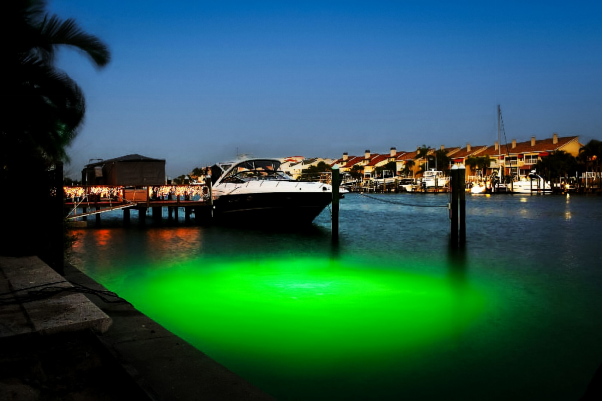
While often viewed as an aesthetic luxury, underwater LED lighting has become a cornerstone of modern marina design due to its functional ability to improve visibility while reducing surface glare.
Enhancing Water Visibility and Depth Perception
Underwater LED lights illuminate the water column from within, making submerged hazards, dock pilings, and hull outlines more visible.1 For boaters, this is a game-changer. Seeing the “glow” around a piling makes it much easier to judge distance during the final approach to a slip.
In marinas with murky or algae-rich water, the Tyndall effect—the scattering of light by particles—actually helps define the space, creating a luminous “halo” that helps captains identify where the water ends, and the structure begins.
Reducing Surface Glare
One of the greatest dangers in nighttime navigation is surface reflection. Overhead lights reflect off rippling water, creating a “shimmer” that can mask floating debris or smaller vessels (like kayaks). Underwater lighting shifts the illumination below the surface. By lighting from the bottom up or the side out, reflections are virtually eliminated, improving visual clarity for everyone on the pier.
Safety and Man Overboard (MOB) Scenarios
In the unfortunate event of a person falling into the water, visibility is the difference between a quick rescue and a tragedy. Underwater LEDs illuminate the area beneath the docks, making it significantly easier to locate a person in the water compared to using a flashlight from above, which often reflects off the surface and obscures what lies beneath.
Light Color Selection and Visibility Optimization
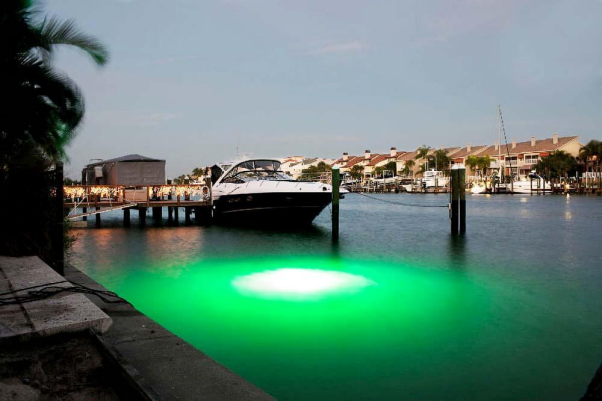
Choosing the right light color is not just about “vibes”; it is a technical decision that affects how far light travels through water and how the human eye perceives detail.
Green Light for Water Penetration
Underwater green lights are the most popular choice for marinas for a scientific reason: the green wavelength of light travels further through both fresh and saltwater than almost any other color.
This wavelength efficiency is rooted in the physics of the visible light spectrum; water molecules and suspended organic matter absorb long-wavelength colors almost instantly, rendering them useless for deep-water illumination. Because green light occupies the “sweet spot” of the spectrum, it experiences significantly less scattering in coastal environments where sediment and tannins are prevalent.
From a physiological perspective, the human eye has evolved to be most sensitive to green wavelengths in low-light conditions. This means boaters and dock staff perceive objects illuminated by green light as sharper and more defined, which is vital during the high-stakes, precision maneuvering required for docking large vessels.
Furthermore, because green LEDs provide such high visibility per watt, marina managers can achieve extensive illumination coverage without significantly increasing the thermal output of the fixtures. This prevents localized water temperature spikes that could otherwise harm fragile micro-ecosystems near the pilings, effectively aligning operational safety goals with long-term environmental stewardship.
- Clarity: Green light cuts through murky, brackish water efficiently.
- Marine Life: Green light is highly effective at attracting baitfish and plankton, which can be a draw for recreational fishing areas within the marina.
The Role of Underwater Fishing Lights
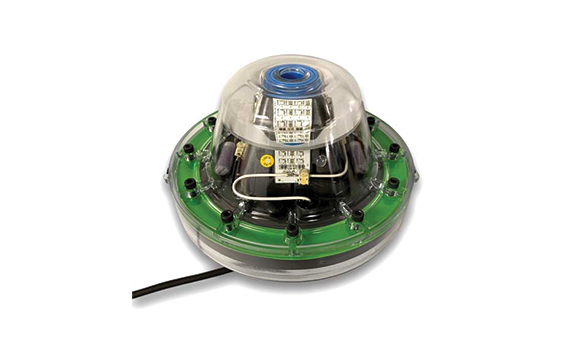
Fishing is a major attraction in many marinas, and lighting plays a significant role in angler satisfaction. However, if not managed, fishing lights can create congestion and conflict with navigation.
Strategic Placement for Ecological Balance
Underwater fishing lights should be placed in designated fishing areas, such as the ends of piers or public fishing platforms, rather than scattered throughout active slips. This concentrates the fish—and the fishermen—away from private vessels and fuel docks.
Managing Light Intensity
Excessive brightness can actually stress fish and alter their natural feeding behavior. Modern LED systems allow marina operators to tailor light levels based on the season. For example, during peak migration periods, lights can be dimmed to ensure they aren’t creating an “ecological trap” for juvenile fish.
Marine Underwater Lights for Navigation and Safety
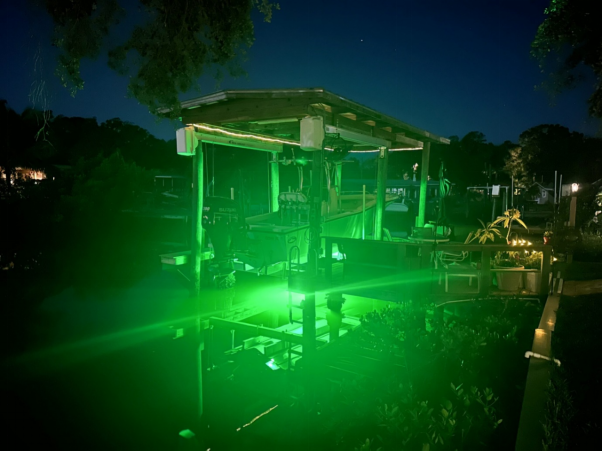
Beyond fishing and aesthetics, underwater lights serve as critical navigational aids.
Marking Channels and Hazards
Submerged lighting can be used to mark the “mouth” of a marina or a particularly shallow sandbar. By using lateral marking colors in an underwater format, marinas can provide a secondary layer of guidance that remains visible even when surface-mounted buoys are obscured by fog or heavy rain.
Emergency Response Support
In emergency situations, reliable underwater illumination improves visibility for harbor masters and first responders. It aids in vessel identification and allows for the quick recognition of hazards like leaking fuel or submerged debris that could foul a rescue boat’s propeller.
Smart Controls and Adaptive Lighting Systems
The Smart Marina is no longer a concept of the future; it is a current reality. Centralized control systems allow for a level of management that was impossible a decade ago.
Centralized Management Platforms
Modern LED systems can be integrated into a single dashboard accessible via smartphone or tablet.
- Scheduling: Automatically adjust lighting based on sunset/sunrise times.
- Dimming: Lower the lights during the “quiet hours” (e.g., 2:00 AM to 5:00 AM) to save energy.
- Grouping: Turn on all lights in a specific “finger” of the marina if a security alarm is triggered.
Motion Sensors and Adaptive Technology
In a large marina, 80% of the facility may be unoccupied at any given time during the night. Using Passive Infrared (PIR) or Microwave sensors, lights can remain at a 5% “glow” for safety and only ramp up to 100% when they detect the heat signature of a person or the motion of a boat. This drastically reduces light pollution and extends the life of the fixtures even further.
Sustainability and Environmental Stewardship
Environmental responsibility is no longer just a nice-to-have; it is a requirement for many marina permits and a key part of corporate social responsibility.
Reducing Sky Glow
“Sky glow” is the brightening of the night sky over inhabited areas. For marinas, this often happens when unshielded lights reflect off the water and into the atmosphere. By using full-cutoff fixtures (lights that emit 0% of their light above 90 degrees), marinas can ensure they are being good neighbors to both the stars and nearby residential communities.
Protecting Nocturnal Wildlife
Sea turtles, migratory birds, and various fish species are highly sensitive to light.
- Turtle-Friendly Lighting: In coastal areas, marinas may be required to use LED lighting, which is less disruptive to nesting turtles.
- Shielding: Directing light strictly downward ensures that the “light footprint” does not extend into sensitive shoreline habitats.
Installation, Infrastructure, and Maintenance
The success of a lighting strategy depends heavily on the quality of the installation.
Electrical Infrastructure Planning
LED retrofits often reduce the total power demand on a marina’s grid, which can actually free up power for other amenities like electric boat charging stations. However, the existing wiring must be inspected. Saltwater can wick through wires, causing internal corrosion that an LED fixture won’t fix. Marine-rated, tin-coated copper wiring is the standard for long-term reliability.
The Importance of Professional Installation
Installing lighting in a marine environment requires specialized knowledge of grounding, bonding, and electrolysis. Professional marine electricians ensure that the lighting system doesn’t inadvertently cause galvanic corrosion on boat hulls or dock hardware.
Ongoing Maintenance and Monitoring
While LEDs are low-maintenance, they are not “no-maintenance.”
- Lens Cleaning: Underwater lights will eventually experience “bio-fouling” (algae and barnacle growth). Many modern lights are designed with specialized coatings to resist this, but a quick scrub during a diver’s routine inspection is still recommended.
- System Health Checks: Smart drivers can report “faults” back to the manager before a light even goes out, allowing for proactive repairs.
Financial ROI and Insurance Benefits
Investing in high-quality LED lighting provides more than just visibility; it offers a measurable return on investment.
- Reduced Insurance Premiums: Many marine insurance providers offer lower rates for facilities that can demonstrate “Best-in-Class” safety measures, including comprehensive, motion-activated LED lighting and security integration.
- Higher Slip Occupancy: Boat owners are more likely to lease slips in a marina that feels safe and easy to navigate at night. Lighting is a primary factor in the perceived value of a marina.
- Lower Labor Costs: When you aren’t replacing light bulbs every six months, your maintenance crew can focus on revenue-generating tasks like boat detailing or dock repairs.
Enhancing the Marina Experience
Well-designed lighting shapes how people experience the waterfront. Evenly lit walkways feel welcoming and secure, reducing the intimidation factor for new boaters. Subtle underwater illumination adds a sense of luxury and reinforces the idea that the marina is a premium facility that cares about its tenants.
Ultimately, lighting becomes part of the marina’s identity. It transforms a dark, industrial pier into a vibrant, safe, and beautiful destination that serves the community 24 hours a day.
Conclusion
Maximizing visibility in large piers and marinas requires more than installing brighter fixtures. It demands a strategic, layered approach that balances safety, efficiency, aesthetics, and environmental responsibility.
LED technology provides the flexibility and precision needed to achieve this balance. Through zoning, smart controls, and the thoughtful use of underwater LED lights, marina operators can enhance visibility while reducing energy consumption and ecological impact. By integrating solutions such as underwater green lights, a marina can operate as a beacon of safety and sustainability.
The result is a well-lit waterfront that supports navigation, recreation, and long-term stewardship—ensuring that the natural beauty of the marine environment remains the star of the show.
Transform Your Marina with Underwater Lighting Systems from Incredible Underwater LED Lighting
Elevate your facility with Incredible Underwater LED Lighting. Our premium underwater LED lights and underwater dock lights maximize visibility and safety. Install underwater green lights for clarity, or use underwater fishing lights to attract marine life. Trust our marine underwater lights to transform your marina today. Shop now!
Frequently Asked Questions
1. Are LED underwater lights better?
Yes, LED underwater lights are significantly more efficient, durable, and effective than traditional lighting. They consume up to 80% less energy, emit minimal heat, and provide a much broader spectrum of colors. Their solid-state design also resists the harsh corrosive conditions of the marine environment far better than fragile incandescent or halogen bulbs.
2. How do dock lights work?
Underwater dock lights are designed to be submerged and anchored to the seabed or pilings using a weighted system. They are typically low-voltage (12V–24V DC) for safety and connect to an above-water control box. Most systems feature an integrated photocell that automatically activates the lights at dusk and turns them off at dawn, creating a hassle-free, “plug-and-play” experience.
3. What is the warranty on underwater fish lights?
Incredible Underwater LED Lighting offers up to a 2-year extended warranty on all of our products.
4. How many years does an LED light last?
Most high-quality marine LEDs are rated for 50,000 to 100,000 hours. In a typical marina environment where lights run 8 hours per night, this translates to a lifespan of 17 to 30+ years. Even with continuous 24/7 use, these fixtures can last approximately 6 to 10 years before requiring replacement, drastically reducing long-term maintenance costs.
